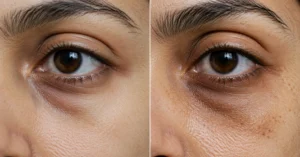
Your skin spends the day defending itself and the night repairing itself. That single difference explains why sunscreen belongs in the morning, why retinol usually belongs at night, and why copying someone else’s routine rarely works as well as understanding what each step is supposed to do.
The first routine I ever followed was exactly the same morning and night. Cleanser. Moisturizer. Done. It wasn’t wrong. It just ignored what my skin was dealing with for the other 22 hours of the day. The biggest improvement didn’t come from buying more products. It came from using the right products at the right time.
If you’re building your first skin care routine, understanding the difference between morning and night matters more than owning a shelf full of products.
Quick Overview
| Time | Main Goal | Essential Steps | Ingredients Often Used |
|---|---|---|---|
| Morning | Protection | Cleanse, moisturize, sunscreen | Vitamin C, niacinamide, antioxidants |
| Night | Repair | Cleanse, treatment, moisturize | Retinol, peptides, exfoliating acids |
| Both | Maintain skin barrier | Gentle cleansing and hydration | Ceramides, glycerin, hyaluronic acid |
Morning vs Night Skin Care Routine: The Quick Answer
The morning vs night skin care routine difference comes down to protection versus repair.
Morning routines help defend your skin from UV exposure, pollution, sweat, and environmental stress. Night routines focus on recovery because your skin naturally increases repair activity while you sleep.
For most beginners, a morning routine needs only three essentials: cleanser, moisturizer, and sunscreen. A night routine usually adds treatment products such as retinol, peptides, or exfoliating acids.
That’s the answer. The rest is choosing the right ingredients for your skin type and using them consistently.
What Healthy Skin Needs During the Day vs Overnight
Skin isn’t equally busy throughout the day.
During daylight hours, it faces ultraviolet radiation, temperature changes, air pollution, friction from clothing, and repeated exposure to sweat and oil. Protection becomes the priority.
At night, none of those pressures matter nearly as much. Your skin shifts toward recovery. Water loss tends to increase overnight, which explains why richer moisturizers often feel better before bed than before work.
This is where many routines go wrong. People buy products designed for repair and use them during the day when protection should be the focus.
Think of it this way.
Morning skin care is the shield.
Night skin care is the repair crew.
Both matter. But they aren’t doing the same job.
Skin Type Still Matters
A routine should match your skin type.
Oily Skin
- Lightweight gel moisturizers
- Niacinamide
- Oil-free sunscreen
Dry Skin
- Ceramides
- Glycerin
- Hyaluronic acid
- Richer creams at night
Sensitive Skin
- Fragrance-free formulas
- Minimal active ingredients
- Slow introduction of treatments
Combination Skin
- Lightweight hydration
- Balanced cleansers
- Targeted treatment areas
One of the easiest ways to irritate skin is copying a routine designed for a completely different skin type.
The Benefits of Having Different Morning and Night Routines
A separate routine sounds like more work.
Usually it isn’t.
The morning routine often takes less than five minutes. The night routine may take seven or eight.
The payoff is that each product has a clearer purpose.
Better Sun Protection
This is the non-negotiable benefit.
No anti-aging ingredient outperforms daily sunscreen.
You can spend months using retinol and vitamin C. Without consistent SPF 30 or higher, you’re fighting damage while continuing to create more of it.
More Effective Active Ingredients
Some ingredients work best when sunlight isn’t involved.
Retinol is the obvious example.
Many people notice smoother texture after 8–12 weeks of consistent use. The limitation is irritation. Dryness, peeling, and temporary redness are common when people start too aggressively.
Using it at night gives the ingredient the environment it was designed for.
Stronger Skin Barrier
The skin barrier is simply the outer layer that helps retain moisture and keep irritants out.
When morning products focus on protection and evening products focus on repair, that barrier tends to perform better over time.
And when the barrier is healthy, almost every skin concern becomes easier to manage.
Morning Skin Care Routine Step by Step
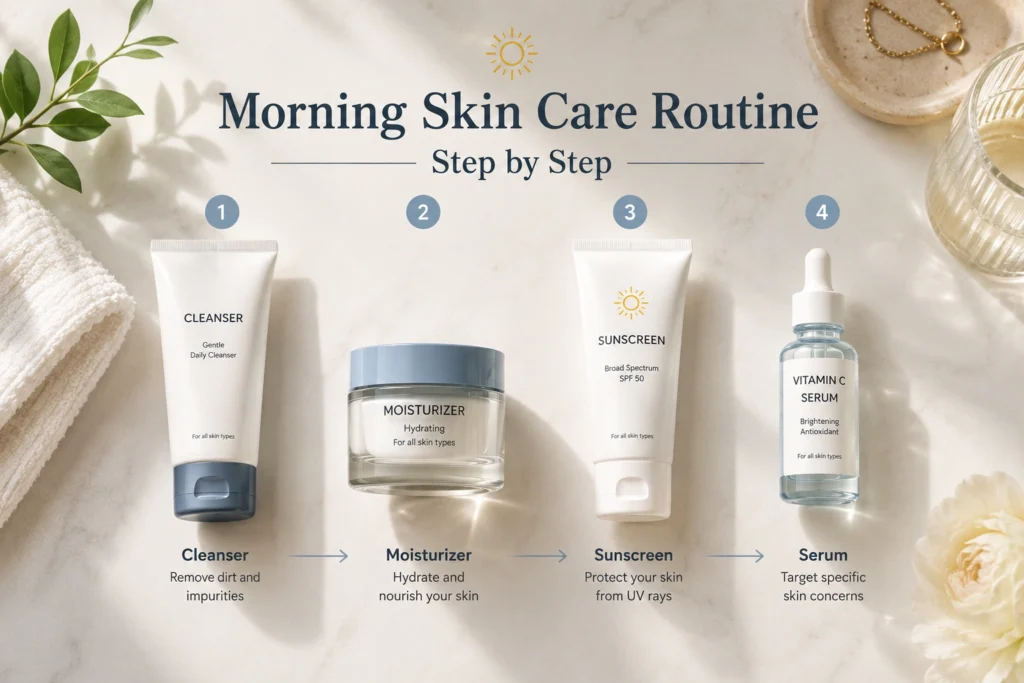
The best beginner routine is shorter than most social media routines.
Five products before breakfast isn’t discipline. It’s marketing.
Step 1: Cleanse
Use a gentle cleanser that removes overnight oil and sweat without leaving your face tight.
If your skin is very dry, even a water rinse can be enough in the morning.
A cleanser containing glycerin works well for many beginners because it cleans without aggressively stripping moisture.
Step 2: Antioxidant Serum (Optional)
This is where vitamin C often fits.
Vitamin C targets dullness, uneven skin tone, and environmental stress.
Expected timeline:
- Brightness improvements: 4–8 weeks
- Pigmentation improvements: 8–12 weeks
Limitation:
Some formulas can sting sensitive skin.
If you’re new to skin care, this step can wait until your basics are consistent.
Step 3: Moisturizer
Moisturizer is not only for dry skin.
Oily skin loses water too.
Look for:
- Ceramides
- Glycerin
- Hyaluronic acid
Texture matters more than people think. A moisturizer you enjoy using every day usually beats a technically better product that sits untouched in a cabinet.
Step 4: Sunscreen
If you remember one thing from this article, make it this.
Wear sunscreen every morning.
Even when you’re indoors most of the day.
Even when it’s cloudy.
SPF 30 or higher is the practical starting point for most people.
The honest mistake I made for years was treating sunscreen like a beach product. My skin didn’t spend most of its life on a beach. It spent it walking outside for coffee, sitting near windows, and commuting.
That’s where most exposure happens.
Night Skin Care Routine Step by Step
Night routines earn their reputation because this is where treatment products usually live.
But don’t confuse more products with better results.
Consistency beats complexity almost every time.
Step 1: Remove Sunscreen and Makeup
This step matters more than any serum.
A gentle cleanser is enough for many people. Heavy makeup wearers often prefer a cleansing balm followed by a water-based cleanser.
The goal isn’t squeaky-clean skin.
It’s clean skin.
Step 2: Treatment Product
Choose one primary concern.
Not four.
Retinol:
- Targets fine lines and texture
- Frequency: 2–3 nights weekly initially
- Results: typically 8–12 weeks
Salicylic Acid:
- Targets clogged pores
- Frequency: 2–4 times weekly
- Best for oily or acne-prone skin
Lactic Acid:
- Targets dullness
- Frequency: 1–3 times weekly
- Often gentler than stronger exfoliating acids
Many beginners damage their skin by stacking all three at once.
Don’t.
One treatment. Give it time.
Step 3: Moisturizer
Night moisturizers are not the same as morning ones.
At night, your skin loses more water through transepidermal water loss. That’s why richer textures often feel more comfortable.
Look for:
- Ceramides (repair barrier)
- Cholesterol and fatty acids (support structure)
- Hyaluronic acid (hydration retention)
A simple observation: if your skin feels tight in the morning, your night moisturizer is too light or not sealing moisture properly.
Step 4: Optional Occlusive (For Dry Skin Only)
This is where products like petroleum jelly or thick balms appear.
They don’t “add moisture.” They trap it.
Best for:
- Very dry skin
- Cold climates
- Post-exfoliation irritation
Not necessary for oily or acne-prone skin. For them, this step often causes congestion instead of comfort.
The One Mistake Most Beginners Make
They treat skin care like a checklist instead of a system.
Cleanser. Serum. Moisturizer. Sunscreen. Done.
But skin doesn’t respond to steps in isolation. It responds to combinations over time.
The most common mistake I see is layering active ingredients without understanding overlap.
Vitamin C in the morning. Retinol at night. Salicylic acid somewhere in between.
Individually fine. Together, without control, they can quietly damage your barrier.
What that looks like in real life:
- Sudden dryness
- Random breakouts
- Skin that stings with basic products
The fix is boring but effective.
Reduce products. Increase consistency.
Product Recommendations (Beginner-Friendly Categories)
Not brands. Categories first. Because ingredients matter more than packaging.
Gentle Cleanser
Look for:
- Glycerin
- Ceramides
- Amino acid-based surfactants
Avoid:
- High alcohol content
- Strong fragrance
- Harsh foaming agents
Who it’s for:
All skin types, especially beginners.
Moisturizer
Look for:
- Ceramides (barrier support)
- Hyaluronic acid (hydration)
- Niacinamide (oil regulation + tone support)
Dry skin can go richer.
Oily skin should stay gel-based.
Expected result timeline:
- Hydration improvement: 1–2 weeks
- Barrier improvement: 3–6 weeks
Sunscreen (Non-Negotiable)
Look for:
- SPF 30 or higher
- Broad spectrum protection (UVA + UVB)
- Lightweight finish if used daily
Common limitation:
Many people quit sunscreen because of texture, not science. The wrong sunscreen gets abandoned. The right one disappears on skin.
Retinol (Night Use Only)
Look for:
- Low concentration for beginners
- Encapsulated formulas (gentler release)
Expected results:
- Texture improvement: 6–10 weeks
- Fine lines: 10–16 weeks
Limitations:
- Purging phase possible
- Dryness in first weeks
Not suitable for:
Very sensitive or compromised skin unless guided.
Frequently Asked Questions About Morning vs Night Skin Care Routine
Do I really need different morning and night routines?
Yes, but not complicated ones. Morning focuses on protection, especially sunscreen. Night focuses on repair and treatment. The difference isn’t product quantity—it’s purpose. Even a simple 3-step morning and 3-step night routine is enough for most beginners.
Can I use the same moisturizer morning and night?
You can. The difference is texture preference and climate. Lighter moisturizers often work better in the morning under sunscreen. Richer ones feel better at night because skin loses more water while you sleep.
When should I start using active ingredients like retinol?
Only after your basic routine is stable. That means cleanser, moisturizer, and sunscreen daily without irritation. Most beginners start retinol too early and quit because of dryness or peeling.
What happens if I skip sunscreen but use good night products?
You slow down your progress significantly. Night products repair skin, but UV exposure during the day keeps creating new damage. It’s like fixing a wall while it’s still being chipped.
How long before I see results from a proper routine?
Hydration changes: 1–2 weeks
Texture changes: 4–8 weeks
Pigmentation or fine lines: 8–16 weeks
Skin care is slow. Anyone promising overnight transformation is selling marketing, not biology.
Continue Exploring:
- Complete Beginner Beauty Guide
A broader breakdown of how skin care fits into full body and hair routines. - Why Sunscreen Matters More Than Anything Else
A deeper dive into UV damage and long-term skin health impact.