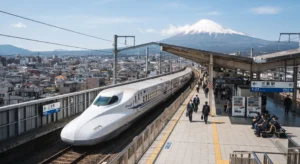
Tokyo rewards deep neighborhood exploration — but after a week of Shibuya crossings and Shinjuku skyscrapers, the city’s surroundings pull in a different direction. Kamakura’s coast sits 40 minutes south on a direct train. Nikko’s mountain shrines demand two hours each way but deliver UNESCO World Heritage sites that feel worlds away from Tokyo’s density. The question isn’t whether you should leave the city. It’s which trips justify the travel time and which ones exist only because guidebooks repeat them.
This post covers seven day trips from Tokyo that earn the journey: Kamakura, Nikko, Hakone, Kawagoe, and Yokohama, plus two alternatives most visitors skip. You’ll get exact train times, real 2025–2026 costs, and the honest assessment of what each destination actually delivers versus what the brochures promise.
Structured Element: Day Trip Comparison Table
| Destination | Train Time | Cost (Return) | Best For | Limitation | Verdict |
|---|---|---|---|---|---|
| Kamakura | 40 min | ¥1,840 | First-timers, temples, coast | Crowded on weekends | Go — easiest win |
| Nikko | 2 hrs | ¥10,800 | UNESCO shrines, nature | Long travel day | Go if you have time |
| Hakone | 1.5–2 hrs | ¥8,000–12,000 | Hot springs, Fuji views | Tourist circuit feels packaged | Conditional — skip if short on time |
| Kawagoe | 30–45 min | ¥1,000–1,500 | Edo streets, food | Small, 2–3 hours max | Go for half-day |
| Yokohama | 30 min | ¥600–1,200 | Urban exploration, food | Feels like Tokyo Lite | Skip if Tokyo time is tight |
What Tokyo’s Surroundings Offer — And What They Don’t
Tokyo sits at the center of Japan’s most densely populated region, which means day trips access 1,000 years of history, mountain temples, and coastal towns without requiring hotel changes. But proximity doesn’t automatically mean value. The train ride to Nikko costs ¥5,400 one-way and takes two hours — that’s four hours of your day before you see a single shrine. Kamakura is 40 minutes and ¥920. The math matters when you’re on a 10-day itinerary.
First-timers often assume every temple town outside Tokyo will feel like Kyoto. They don’t. Kamakura has the Great Buddha and a handful of significant temples, but it’s also a beach town with a surfing culture and a main street lined with souvenir shops selling the same wooden spoons. Nikko is genuinely spectacular — the Toshogu Shrine complex is ornate in a way that Tokyo’s simpler shrines aren’t — but it’s also a full-day commitment that leaves you exhausted.
Experienced Japan travelers use day trips strategically: Kawagoe for Edo-era architecture without Kyoto’s crowds, Yokohama for a different urban rhythm when Tokyo starts to blur, Hakone only if the weather forecast is clear enough to actually see Mount Fuji. The key is matching the destination to what you haven’t seen yet, not checking boxes because a list told you to.
Kamakura: The Closest Hit of Temples and Coast
Kamakura is the easiest day trip from Tokyo for a reason: the JR Yokosuka Line runs direct from Tokyo Station, Shinagawa, and Shibuya to Kamakura Station in 40–55 minutes depending on your starting point. No transfers. No reservations. Trains leave every 15 minutes. The cost is ¥920 one-way without a JR Pass, or covered entirely if you have one (2025–2026 rates — verify before travel).
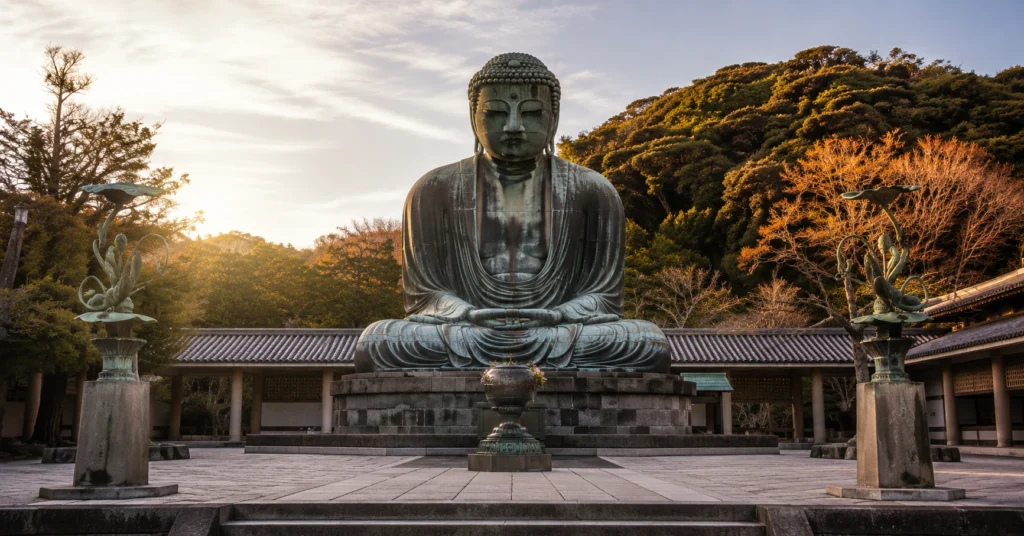
The Great Buddha (Daibutsu) at Kotoku-in Temple is the main draw — a 13.35-meter bronze statue from 1252 that sits outdoors, weathered and serene. It takes 20 minutes to see properly. The entry fee is ¥300. From there, you can walk to Hasedera Temple (¥400 entry) with its ocean views and wooden halls, or hike the 30-minute trail to Daibutsu Hiking Course through forested hills.
But here’s what most guides skip: Kamakura’s Komachi-dori Street, the main shopping drag between the station and the temples, is packed on weekends with tour groups and domestic tourists. Go on a weekday if you can. And after 3pm, the temples thin out — the light gets better for photos, and you can actually hear the wind chimes without 50 people talking over them.
The honest negative: Kamakura feels incomplete if you only see the Great Buddha and leave. It’s designed as a temple circuit — Hasedera, Kotoku-in, Zeniarai Benzaiten, and at least one of the hillside temples. Budget 5–6 hours minimum. If you only have 3 hours, skip it and do Kawagoe instead.
Nikko: Shrines, Waterfalls, and a 2-Hour Train Commitment
Nikko is the most spectacular day trip from Tokyo, and also the most demanding. The Tobu Railway limited express from Asakusa Station takes about 2 hours to Tobu-Nikko Station (¥2,870 one-way for the limited express, or ¥1,520 on the local train taking 3 hours). JR Pass holders can take the JR Shinkansen to Utsunomiya, then transfer to the JR Nikko Line — total journey about 2 hours, ¥5,400 one-way without the Pass (2025–2026 rates — verify before travel).
The payoff is Toshogu Shrine, the lavishly decorated mausoleum of Tokugawa Ieyasu, founder of the Tokugawa shogunate. The detail is overwhelming: gold leaf, intricate carvings, the famous “see no evil, hear no evil, speak no evil” monkeys. Entry to the full complex is ¥1,300. The shrine opens at 8am, and tour buses from Tokyo arrive around 10:30am. Be there at opening or after 3pm.
Beyond Toshogu, Nikko has Rinnoji Temple, the Sacred Bridge (Shinkyo), and Kegon Falls — a 97-meter waterfall accessible by bus from the shrine area (another 40 minutes each way). The falls are genuinely impressive, but that’s another 90 minutes of your day on a bus.
The honest trade-off: Nikko requires a 7am start and a 6pm return to Tokyo if you want to see both the shrines and the falls. That’s 11 hours. If you’re tired, jet-lagged, or only have one week in Japan, this is the day trip to skip. If you have 10+ days and want to see Japan’s most ornate shrine complex, it’s worth the exhaustion.
Hakone: Hot Springs, Lake Views, and the Tourist Circuit Reality
Hakone is Japan’s most packaged day trip experience — and that’s both its strength and its weakness. The Hakone Free Pass from Shinjuku Station costs ¥6,190 and covers the round-trip Romancecar train (reserved seat), plus all local transport: buses, the Hakone Tozan Railway, cable car, ropeway, and pirate ships across Lake Ashi (2025–2026 rates — verify before travel). Without the pass, you’re looking at ¥8,000–12,000 for the full circuit.
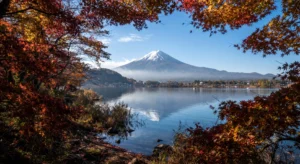
The loop goes like this: train to Hakone-Yumoto, bus or train up the mountain, ropeway over volcanic vents at Owakudani (where you can eat black eggs boiled in sulfur springs), cable car down to Lake Ashi, pirate ship across the lake, bus back to the train station. On a clear day, you see Mount Fuji from the lake. On a cloudy day — which is about 40% of the year — you see grey water and mist.
The onsen (hot spring) experience is real and genuinely relaxing, but most day-trippers don’t have time for a proper bath. You’d need to book a ryokan with onsen access, which turns this into an overnight trip.
The strong take: Skip Hakone if your Japan itinerary is under 10 days or if the weather forecast shows clouds. Do it if you have time, the sky is clear, and you want a taste of Japan’s onsen culture without booking accommodation. But know that you’re buying a curated experience, not discovering something raw.
Kawagoe: Edo-Era Streets Without the Kyoto Crowds
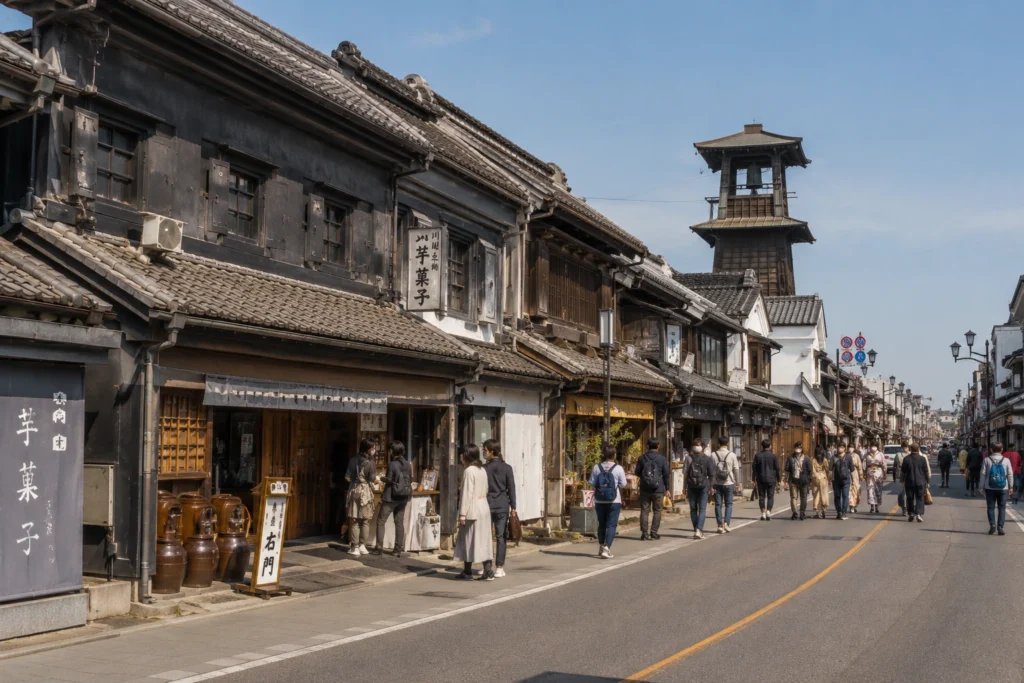
Kawagoe, nicknamed “Little Edo,” sits 30–45 minutes northwest of Tokyo on the Tobu Tojo Line or JR Kawagoe Line. The cost is ¥500–700 one-way depending on your route (2025–2026 rates — verify before travel). The main attraction is Kurazukuri Street, a preserved district of Edo-period storehouses with black-tiled roofs and whitewashed walls.
Unlike Kyoto’s Gion district, which feels staged for tourists, Kawagoe’s old town still functions as a neighborhood. People live in these buildings. The sweet potato snacks (koyaki) are a local specialty — you’ll see them being made in shops along the street. The Toki no Kane bell tower, rebuilt after fires in the 1890s, chimes four times a day and is the area’s landmark.
You can see Kawagoe properly in 2–3 hours. That makes it perfect for a half-day trip: leave Tokyo at 10am, walk the old streets, grab lunch at a soba shop, be back by 2pm with your evening free. Or go late afternoon, catch the golden hour light on the storehouses, and have dinner before heading back.
The precise observation: The main street gets crowded on weekend afternoons with domestic tour groups. Weekday mornings are quiet enough that you can photograph the architecture without people in every frame. And the side streets branching off Kurazukuri are almost empty — that’s where you find the actual neighborhood life.
Yokohama: Japan’s Second City, 30 Minutes Away
Yokohama is Japan’s second-largest city, and it’s 30 minutes from Tokyo Station on the JR Tokaido Line or Keihin-Tohoku Line (¥580 one-way, covered by JR Pass). That proximity is both the point and the problem: if you’re short on time in Japan, Yokohama feels like a less intense version of Tokyo rather than a distinct destination.
But if you have a full week in Tokyo and need variety, Yokohama delivers. The Minato Mirai waterfront district has modern architecture, the Cup Noodles Museum (yes, really — you can design your own instant ramen), and the Red Brick Warehouse, a Meiji-era building converted into shops and restaurants. Chinatown here is larger and more active than Tokyo’s, with about 600 restaurants and food stalls.
The cost is minimal — just the train fare — and you can be back in Tokyo for dinner if you want. It works as a low-stakes day trip when you’re tired of Tokyo’s intensity but not ready to commit to a 2-hour train ride.
The honest admission: I spent a full day in Yokohama on my first Japan trip thinking I needed to “see it all.” I left after 3 hours realizing I’d rather have that time back in Tokyo’s Yanaka district or Shimokitazawa. Yokohama is worth a half-day if you’re in the area or have extra time. It’s not worth sacrificing a Nikko or Kamakura day.
Day Trip Logistics: Trains, Costs, and Timing That Actually Works
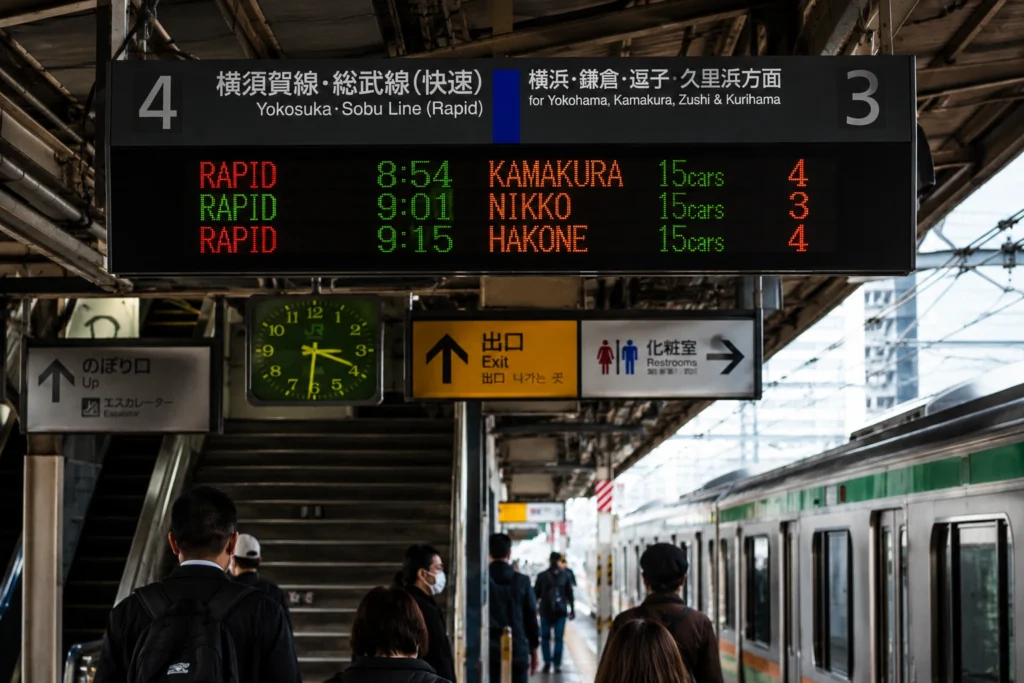
Japan’s train system makes day trips from Tokyo logistically simple, but the details matter. Here’s what you need to know:
IC Cards: Get a Suica or Pasmo card at any major Tokyo station. These reloadable cards work on virtually all trains, buses, and even convenience stores in the Tokyo region. You tap to enter, tap to exit, and the fare is deducted automatically. No ticket machines, no calculating fares. For day trips to Kamakura, Yokohama, and Kawagoe, this is all you need.
JR Pass arithmetic: A 7-day JR Pass costs ¥50,000 (2025–2026 rates — verify before travel). Tokyo to Kyoto return is ¥28,340. Add Nikko (¥10,800 return) and you’re at ¥39,140. You’d need one more long-distance trip to break even. If you’re only doing day trips from Tokyo and staying in the city, the JR Pass doesn’t pay off. Buy individual tickets or regional passes like the Hakone Free Pass instead.
Timing strategy: Leave Tokyo by 8am for Nikko or Hakone to beat the tour buses. For Kamakura and Kawagoe, a 9am or 10am start is fine — you’ll still have daylight and time to see everything. Return trains run until about 10pm from most destinations, but you’ll be tired. Aim to be back in Tokyo by 7pm.
What to pack: Comfortable walking shoes (you’ll cover 8–12km), a refillable water bottle (vending machines everywhere but plastic waste adds up), cash (many small temples and food stalls don’t take cards), your IC card, and a light rain jacket regardless of forecast — weather changes fast in coastal and mountain areas.
Frequently Asked Questions About Day Trips from Tokyo
What is the easiest day trip from Tokyo by train?
Kamakura is the easiest day trip from Tokyo — 40 minutes on the JR Yokosuka Line from Tokyo or Shinagawa Station, costing ¥920 one-way with a JR Pass or cash. No transfers, no reservations needed, and it runs every 15 minutes. You can leave Tokyo at 8am, see the Great Buddha and three temples, walk to the beach, and be back by 5pm without feeling rushed.
Do I need a JR Pass for day trips from Tokyo?
For day trips alone, no. A 7-day JR Pass costs ¥50,000 (2025–2026 rates — verify before travel). Tokyo to Nikko return is ¥10,800. Tokyo to Hakone return is around ¥8,000. You’d need to do Tokyo-Kyoto-Tokyo plus multiple day trips to break even. Buy individual tickets or a regional pass like the Hakone Free Pass instead.
Which Tokyo day trip is best for first-time visitors to Japan?
Kamakura for temple culture without Kyoto’s crowds, or Nikko if you have a full day and want UNESCO World Heritage shrines in a mountain setting. Kamakura is easier logistics-wise; Nikko is more spectacular but requires a 2-hour train each way and benefits from an early start.
Can you visit Mount Fuji on a day trip from Tokyo?
You can visit the Kawaguchiko area on the northern side of Mount Fuji on a day trip — about 2 hours each way via highway bus (¥1,800–2,200 one-way) or train to Kawaguchiko Station. You won’t climb the mountain (climbing season is July–September and requires 2 days), but you can see it clearly on a good day and visit lakeside viewpoints. Winter and early spring offer the clearest views.
What should I pack for a day trip from Tokyo?
Comfortable walking shoes (you’ll cover 8–12km), a refillable water bottle (vending machines everywhere but plastic waste adds up), cash (many small temples and food stalls don’t take cards), your IC card (Suica or Pasmo) for trains and convenience stores, and a light rain jacket regardless of forecast — weather changes fast in coastal and mountain areas.
Continue Exploring
- Tokyo Travel Guide — If you’re building a Japan itinerary, this guide covers Tokyo’s neighborhoods, where to stay, and how many days you actually need in the city before heading elsewhere.
- Japan Travel Guide — For the bigger picture: how to structure a 10–14 day Japan trip, when to buy the JR Pass, and which destinations beyond Tokyo deserve your time.