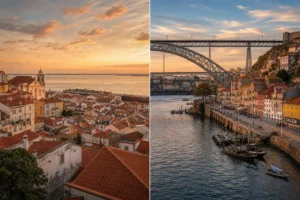
The first thing you notice is the silence.
Not literal silence — Porto still hums — but the absence of the frantic edge that defines Lisbon by mid-morning. I arrived on a 7:20am train from Lisbon, stepped out at Campanhã, and within 30 minutes was standing above the Douro watching shopkeepers drag open metal shutters one by one. No tour buses. No lines. Just a city waking up at its own pace.
Lisbon sells itself better. Porto delivers more once you’re there.
This porto travel guide breaks down exactly how to visit Porto properly — where to stay, what to skip, how much it actually costs, and how to avoid the mistakes most first-timers make.
Quick Overview
Porto sits in northern Portugal, where the Douro River meets the Atlantic. It’s smaller than Lisbon, steeper in places, and noticeably slower.
That slower pace is the advantage.
- Best time to visit: May–June and September–October
- Ideal stay: 2–3 days
- Daily budget: $90–$130/day (2025–2026 rates — verify before travel)
- Airport: Francisco Sá Carneiro Airport (OPO)
Portugal falls under the Schengen Zone. Non-EU visitors are limited to 90 days within any 180-day period (Verify at official source — rules change without notice).
Top Things to Do
Ribeira at the Right Hour
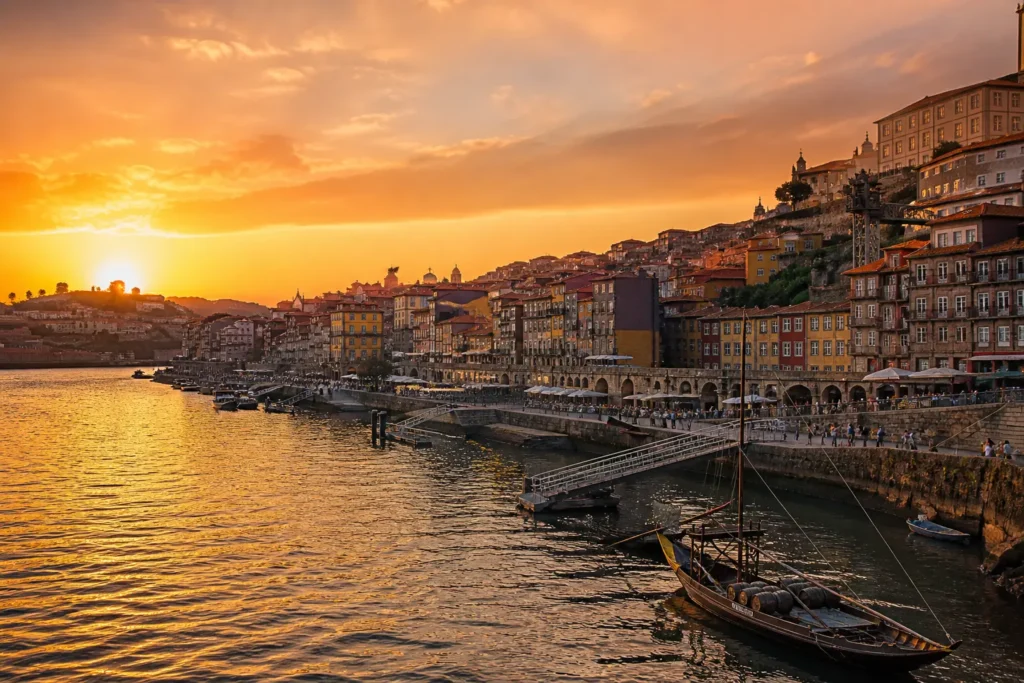
Ribeira is Porto’s postcard — but timing decides whether it feels real or staged.
At 2pm, it’s crowded and overpriced. At 8am, it’s a different place entirely. Café chairs still stacked, locals setting up, the river almost flat. That’s when you walk it.
I paid €1.50 for a coffee here in the morning and €4.50 for the same thing later that day just 30 meters away. The difference wasn’t the coffee — it was the timing.
Port Wine Cellars in Vila Nova de Gaia
Cross the Dom Luís I Bridge and you’re in Vila Nova de Gaia, where the port wine lodges sit.
Skip the first cellar offering a “quick tasting.” The €15 tours feel rushed. Spend €25–€30 instead for a proper guided tasting where someone explains the difference between tawny and ruby without sounding like a script (2025–2026 rates — verify before travel).
You’re not just drinking — you’re learning why this city exists.
Livraria Lello (And the Better Alternative)
Livraria Lello charges an entry fee and draws a constant line outside.
Inside, it’s crowded enough that you’ll spend more time avoiding elbows than looking at books.
Instead, walk 10 minutes to Poetria in Cedofeita. Smaller, quieter, and focused on poetry and independent publishing. You’ll actually browse, which is the point.
Douro River Walks Beyond the Center
Most visitors stay within Ribeira.
Walk west along the river toward Foz do Douro. It takes about 45 minutes, and the city gradually opens up — fewer crowds, more locals, wider views.
By the time you reach the Atlantic, Porto feels like a different place entirely.
Where to Stay
Choosing the wrong neighborhood changes your entire experience.
Ribeira
- Close to everything
- Visually impressive
- Noisy at night
Good for short stays, not for sleep.
Cedofeita
- Creative district
- Cafés, galleries, independent shops
- Walkable without being chaotic
This is where I stay. It feels like a real neighborhood, not a backdrop.
Boavista
- Quieter, more residential
- Better value hotels
- Slightly removed from main attractions
Good if you want space and don’t mind short transport rides.
Getting Around
Porto looks complicated on a map. It isn’t.
- Metro: Connects airport to city center
- Trams: Scenic but slow
- Walking: Best way to understand the city
The hills are real. Comfortable shoes matter more than anything else you pack.
Uber rides rarely exceed €6–€8 within the city (2025–2026 rates — verify before travel), which makes short trips easy when you’re done climbing.
Budget Guide
Porto sits firmly in Southern Europe pricing.
- Coffee: €1.50–€3
- Casual meal: €10–€18
- Dinner with wine: €25–€40
- Hotel (mid-range): $90–$150/night
The gap between tourist restaurants and local spots is obvious.
I had grilled sardines near Ribeira for €22 that felt forgettable. The next day, the same dish in a side street in Cedofeita cost €12 and tasted like the reason people come to Portugal.
Sample Itinerary
Day 1
Arrive, settle into Cedofeita. Walk downhill toward Ribeira in the evening. No agenda — just orientation.
Day 2
Morning in Ribeira before crowds. Cross to Gaia for port wine tasting. Afternoon river walk toward Foz do Douro.
Day 3
Bookshops, cafés, slower exploration. This is when Porto makes sense — not when you rush it.
Pro Tips
- Book accommodations early for September — demand spikes quietly
- Skip restaurants with aggressive street hosts
- Eat where menus are in Portuguese first, English second
- Start days early — Porto rewards mornings more than nights
Lisbon competes for your attention. Porto earns it.
Frequently Asked Questions About Porto Travel
Is Porto better than Lisbon for first-time visitors?
If you prefer a slower pace and fewer crowds, yes. Porto is easier to navigate and less overwhelming, especially for a short trip. Lisbon offers more variety but demands more planning.
How many days do you need in Porto?
Two to three days is ideal. One day feels rushed, and more than three works only if you include Douro Valley trips.
Is Porto expensive compared to Lisbon?
Slightly cheaper overall, especially for food and accommodation. Expect about $90–$130 per day (2025–2026 rates — verify before travel).
Can you visit Porto without a car?
Yes. Porto is highly walkable, and public transport covers key areas. Most visitors do not need a car.
Continue Exploring
- portugal travel guide : A complete country-level breakdown — regions, costs, and planning decisions beyond Porto.
- barcelona travel guide : A different kind of city entirely — faster, louder, and harder to navigate well.