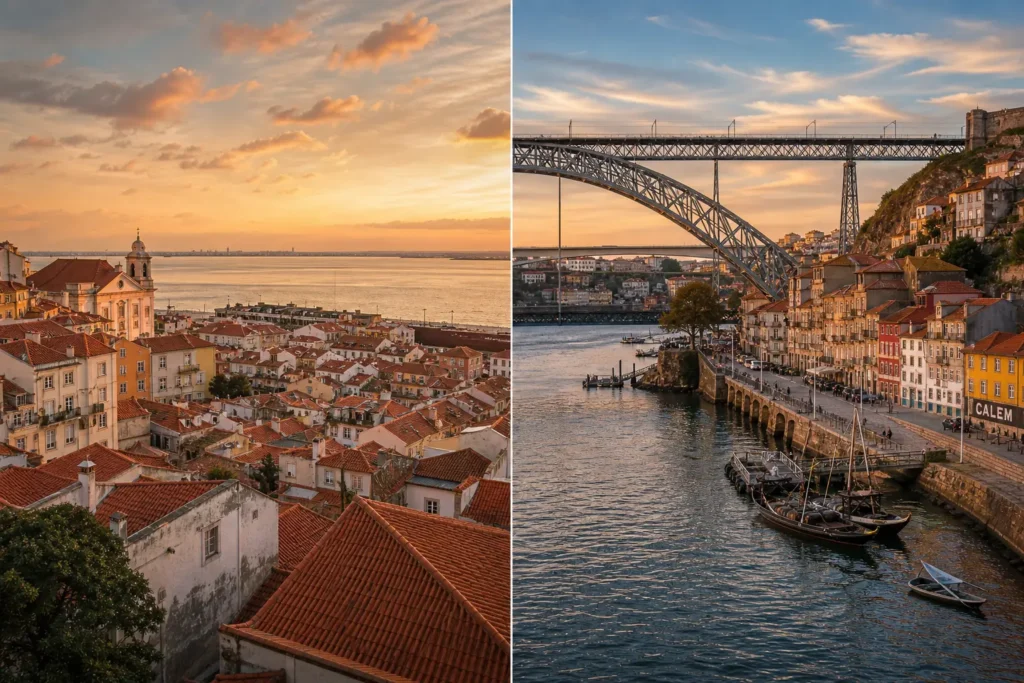
Standing in Alfama at 7:30am, watching the city wake up before the cruise crowds arrive, you understand what Lisbon demands: patience with its hills, respect for its light, and acceptance that you’ll get lost on purpose. Three hundred kilometers north in Porto’s Ribeira district, the Douro moves slower and the port wine cellars have been doing their work since the 1700s. Both cities sit on rivers. Both have UNESCO-listed historic centers. That’s where the similarity ends.
This comparison breaks down lisbon vs porto with specific costs, neighborhood-level details, and a verdict based on your actual travel style rather than generic recommendations. You’ll know exactly which city deserves your limited vacation days by the end.
Quick Verdict
Choose Lisbon if: You want a capital city’s energy with Atlantic coastline access, don’t mind steep hills, and prefer more neighborhood variety. You’re okay paying 15-20% more for the privilege.
Choose Porto if: You want a compact, walkable city where everything feels within reach, prefer northern Portugal’s cooler climate and serious food scene, and want to stretch your budget further without sacrificing quality.
Visit both if: You have 7+ days in Portugal. The 3-hour train connection makes this realistic, and the cities complement rather than compete with each other.
Overview
Lisbon spreads across seven hills with distinct neighborhoods that each have their own personality. Alfama’s medieval alleyways give way to Chiado’s literary cafés, which transition into Bairro Alto’s nightlife and Belém’s monuments. The city rewards slow exploration and rewards you back with pastel de nata from Pastéis de Belém at 8am when the line is still manageable.
Porto compresses its charm into a tighter footprint. The Ribeira waterfront, the Clérigos Tower, the São Bento train station’s azulejo tiles — you can walk between most major sites in 20 minutes. The city feels more intimate, less scattered. Dinner at a tasca in the Cedofeita neighborhood happens earlier, the wine costs less, and the pace matches the cooler northern climate.
Portugal sits in the southern European cost tier, where €90-130/day is realistic for comfortable travel (2025-2026 rates — verify before travel). Lisbon leans toward the higher end of that range. Porto stays closer to €80-110/day without feeling like you’re sacrificing anything important.
Key Differences
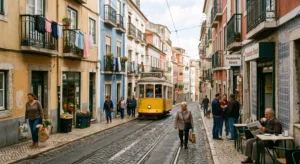
Size and walkability: Lisbon’s public transport system exists for a reason — the hills are real, and distances between neighborhoods add up. You’ll take Tram 28 or the metro whether you planned to or not. Porto’s compact center means you’ll walk everywhere unless you’re heading to the beach at Foz or the port cellars in Vila Nova de Gaia across the river.
Climate: Lisbon averages 280 days of sunshine annually and feels noticeably warmer, especially in summer when temperatures hit 30°C/86°F regularly. Porto’s northern location brings more rain — 1,200mm annually versus Lisbon’s 774mm — and cooler summers that rarely exceed 25°C/77°F. If you’re visiting in July and August, Porto’s climate is genuinely more comfortable for walking.
Food culture: Lisbon serves what tourists expect — bacalhau, grilled sardines, seafood rice — and does it well. Porto’s food scene is more regional, more serious. You’ll find francesinha (the city’s indulgent sandwich with beer-cheese sauce) in the Bonaparte downtown at 11pm after a night out, and you’ll understand why locals defend it fiercely. The tripas à moda do Porto tripe stew isn’t Instagram-friendly, but it tells you everything about this city’s working-class history.
Tourist density: Lisbon’s Alfama and Belém get crowded. The Santa Justa Lift line snakes around the block by 10am. Porto’s Ribeira fills with day-trippers from cruise ships, but the crowds dissipate once you walk five minutes uphill into the Galerias de Paris area. I’ve sat at a café table overlooking the Douro in Porto at 5pm on a Saturday with three other people. Try that in Lisbon’s Praça do Comércio and you’ll be elbow-to-elbow with selfie sticks.
For First-Time Portugal Visitors
Lisbon makes more sense as your introduction to Portugal. The city has the infrastructure, the English-language accessibility, and the variety that first-timers need. You’ll get your pastel de nata fix, ride the historic trams, visit Belém Tower and Jerónimos Monastery, and take a day trip to Sintra without feeling like you’re missing the “real” Portugal.
Start your mornings in Alfama before 9am when the neighborhood belongs to residents hanging laundry and shopkeepers opening their doors. By 11am, the tour groups arrive. This timing matters — it’s the difference between experiencing a living neighborhood and walking through a museum.
Spend your afternoons in Belém, but skip the long line at Pastéis de Belém and walk two blocks to Manteigaria. Same recipe, shorter wait, locals actually go there. Then take the tram back along the river and watch the light hit the 25 de Abril Bridge — Lisbon’s answer to the Golden Gate, though saying that out loud will make any Portuguese person correct you immediately.
Porto works as a first stop if you prefer slower introductions. The city’s scale means you won’t feel overwhelmed. You can climb the Clérigos Tower, explore the São Bento station’s 20,000 azulejo tiles depicting Portugal’s history, and still have energy left for dinner. The Livraria Lello bookstore requires advance tickets now — book online or you’ll waste an hour in line — but it’s worth seeing even if the “Harry Potter inspiration” claims are overstated by tour guides.
For Return Visitors Seeking Depth
If you’ve already done Lisbon’s highlights, Porto deserves your attention on a second trip. The city’s wine culture runs deeper than the port cellars across the river. Book a tasting at Quinta do Vallado in the Douro Valley — yes, it’s an hour outside the city, but the train runs daily and the vineyard’s modern architecture contrasts beautifully with centuries-old terraces.
Back in Lisbon, skip the Belém tourist circuit and head to LX Factory under the 25 de Abril Bridge. This converted industrial complex houses independent shops, street art, and restaurants like the vegetarian-friendly Alma. On Sunday mornings, the nearby Mercado da Ribeira (Time Out Market) fills with locals doing their grocery shopping before the food hall tourists arrive at noon.
Porto’s Cedofeita neighborhood, particularly around Galeria de Paris street, shows you where locals actually eat and drink. Try Antunes for traditional Portuguese dishes without the tourist markup, or head to Conga for petiscos (Portuguese tapas) that pair perfectly with vinho verde from the Minho region.
Cost Comparison
Accommodation (per night, 2025-2026 rates — verify before travel):
- Lisbon mid-range hotel: €90-130
- Porto mid-range hotel: €70-100
- Lisbon Airbnb (1BR, central): €80-120
- Porto Airbnb (1BR, central): €60-90
Food and drink:
- Lisbon pastel de nata: €1.40-1.80
- Porto pastel de nata: €1.20-1.50
- Lisbon coffee (bica): €0.80-1.20
- Porto coffee (bica): €0.70-1.00
- Lisbon dinner for two (mid-range): €45-65
- Porto dinner for two (mid-range): €35-50
- Lisbon glass of vinho verde: €3.50-5
- Porto glass of vinho verde: €2.50-4
Attractions:
- Lisbon: Belém Tower €6, Jerónimos Monastery €10, São Jorge Castle €10, Santa Justa Lift €5.50
- Porto: Clérigos Tower €6, Livraria Lello €8 (deducted from book purchase), port wine cellar tour €15-25, Serralves Museum €10
Daily budget reality: Lisbon €100-130/day, Porto €80-110/day (2025-2026 rates — verify before travel). The difference adds up over a week-long trip.
Transportation: Both cities offer 24-hour public transport passes (Lisbon €6.60, Porto €7). Lisbon’s metro reaches more areas; Porto’s system is smaller but adequate for the compact center.
Final Recommendation
Visit Lisbon when: You have 3-4 days minimum, want coastal access alongside city exploration, don’t mind paying more for a capital city experience, and prefer warmer weather. Lisbon rewards visitors who accept its hills and scattered layout as part of the adventure.
Visit Porto when: You have 2-3 days, prefer walkable cities, want better value without sacrificing quality, and enjoy cooler weather and serious food culture. Porto rewards visitors who slow down and explore beyond the Ribeira waterfront.
The honest answer: If you have 7+ days in Portugal, visit both. Take the morning Alfa Pendular train from Lisbon’s Santa Apolónia to Porto’s São Bento (3 hours, €25-40 depending on booking time). Spend 3-4 days in Lisbon, 2-3 in Porto, and you’ll understand why Portugal keeps drawing return visitors. The cities don’t compete — they complement.
But if you’re choosing one for a shorter trip, match the city to your travel style, not your Instagram feed. Lisbon photographs better. Porto eats better. Both deserve more than a checklist visit.
Frequently Asked Questions About Lisbon vs Port
Is Porto cheaper than Lisbon?
Yes, Porto runs 15-20% cheaper than Lisbon across accommodation, dining, and attractions. Expect €80-110/day in Porto versus €100-130/day in Lisbon for comfortable travel (2025-2026 rates — verify before travel). The difference is most noticeable in restaurant prices and mid-range hotels.
How many days do you need in Lisbon and Porto?
Minimum 3 days in Lisbon, 2 days in Porto. Lisbon’s seven hills and scattered neighborhoods demand more time to explore properly. Porto’s compact Ribeira and downtown can be covered thoroughly in 48 hours without rushing. If you have 7+ days total, split your time between both cities.
Can you visit both Lisbon and Porto in one trip?
Absolutely. The Alfa Pendular train between Lisbon’s Santa Apolónia and Porto’s São Bento takes 3 hours and runs multiple times daily. Book tickets in advance for better prices (€25-40). An overnight stay in Porto breaks up the journey and prevents rushing through either city.
Which city has better food, Lisbon or Porto?
Porto’s food scene is more regional and traditionally rooted, with specialties like francesinha and tripas à moda do Porto. Lisbon offers more variety and international options but leans touristy in central areas. Both cities excel at fresh seafood and pastries. Porto wins for authentic Portuguese cuisine; Lisbon wins for diversity.
Is Lisbon or Porto better for first-time visitors to Portugal?
Lisbon works better for first-timers due to its infrastructure, English-language accessibility, and variety of attractions. You’ll hit major highlights like Belém Tower, Sintra day trips, and historic trams without feeling like you’re missing the “real” Portugal. Porto suits travelers who prefer slower, more intimate introductions to a destination.
Continue Exploring
[Portugal travel guide] — Expand your planning beyond these two cities with our complete Portugal pillar guide covering the Algarve, Douro Valley, and lesser-known regions that deserve your attention.
[Sintra day trip from Lisbon] — Once you’ve chosen Lisbon, this UNESCO World Heritage site 30 minutes away by train offers palaces, gardens, and misty forests that feel like a different country entirely.