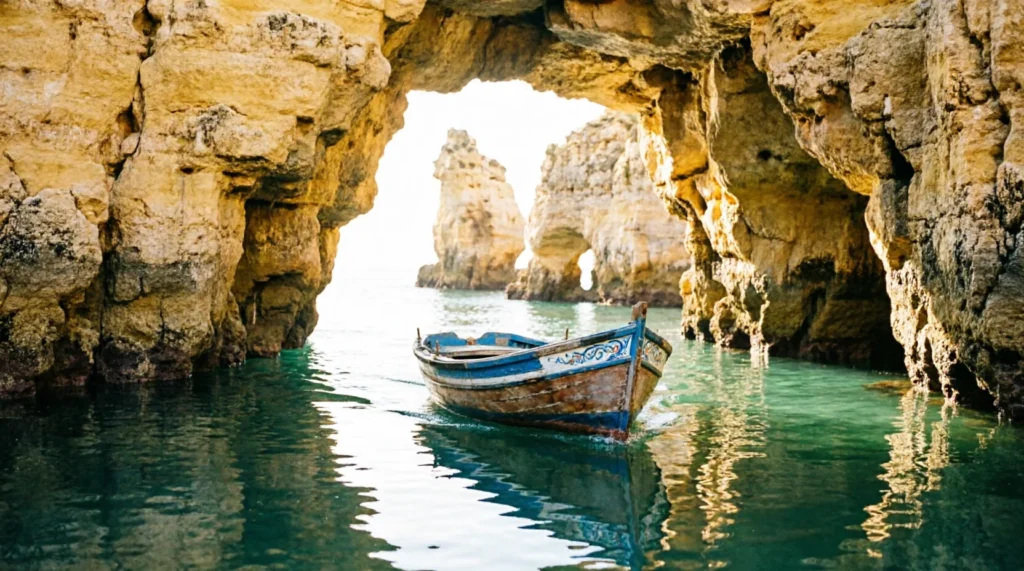
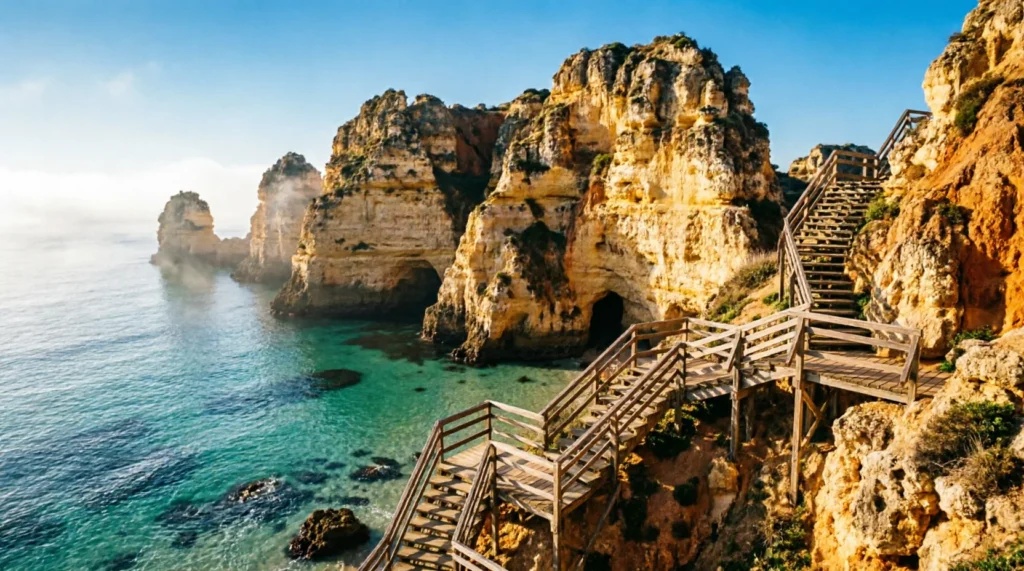
Standing on the edge of the Ponta da Piedade at 7:00 AM, the Atlantic wind carries the scent of salt and parched earth. Below, the limestone stacks—carved into arches and needles over millennia—glow a deep ochre that photos rarely replicate accurately. By 11:00 AM, this same spot will be a gridlock of rental cars and sun-dazed visitors, but for now, it is the quiet, rugged frontier of the continent.
Lagos is the rare destination that survives its own fame, a town where 16th-century walls guard a modern surf culture and some of the most complex coastal geology in Europe.
This lagos portugal guide provides the essential orientation for the first-timer, covering real-world costs, the neighborhood logic that dictates your sleep quality, and the logistical steps to navigate the Algarve without losing your patience.
Quick Overview: The Character of Lagos
Lagos is not a curated resort; it is a working port with a history that is occasionally uncomfortable. It was the home of Europe’s first slave market, a fact the city acknowledges with a somber museum in the Praça do Infante D. Henrique. Today, the vibe is a collision of Barlavento (Western Algarve) grit and international leisure.
While much of the Algarve was flattened in the 1755 earthquake, Lagos retained enough of its DNA to feel distinct from the purpose-built concrete blocks of Albufeira. It rewards the traveler who walks. The city center is a maze of calçada portuguesa (mosaic limestone pavement) that is beautiful to look at and treacherous to walk on with flip-flops after a light rain.
Top Things to Do: Between Grottoes and Cobblestones
Most people arrive with a single image in mind: a sea cave framed by golden rock. You will find that at Ponta da Piedade, but the experience varies wildly depending on your timing.
The Ponta da Piedade Boat Circuit
To see the grottoes, you have two choices: a large catamaran or a small, traditional fishing boat. Take the small boat. Only the smaller vessels can navigate the “Garage” and “Cathedral” caves. Expect to pay €25–€35 per person for a 75-minute tour (2025–2026 rates — verify before travel).
(Verify schedules at the Lagos Marina — rules change without notice)
Praia do Camilo: The 200-Step Descent
This is the Algarve’s “Instagram beach.” The 200 wooden steps leading down to the sand are a bottleneck. Honest negative: In July and August, the sand is so crowded you’ll be stepping over towels just to reach the waterline.
The Alternative: Head to Meia Praia. It lacks the dramatic cliffs but offers 4km of wide, sandy real estate where you can actually breathe.
Where to Stay: Neighborhood Trade-offs
For a first-timer visiting lagos portugal, your choice of neighborhood defines your trip:
- The Historic Center: Best for atmosphere. You are steps from the bars and fish markets. Warning: The noise from Rua 25 de Abril carries until 3:00 AM.
- The Marina: Modern, flat, and easy. Ideal if you are taking the train or booking boat trips daily.
- Porto de Mós: Quiet and residential. You’ll need a car or a high tolerance for Uber wait times, but the beach here is spectacular at sunset.
Getting Around: Trains, Trams, and Two Feet
The Portuguese rail system, CP (Comboios de Portugal), is the backbone of regional travel. There is no direct high-speed train from Lisbon to Lagos; you must change at Tunes.
(Schedules change — confirm before travel at cp.pt)
Inside Lagos, the A Onda bus system covers the main beaches and residential zones. A single trip is approximately €1.60. However, if you are staying central, your best transport is a sturdy pair of sneakers with good grip for the slippery limestone hills.
Budget Guide: The 2026 Reality
Lagos falls into our Southern Europe cost tier. While cheaper than Paris or Amsterdam, the “cheap Portugal” of the 1990s is long gone in the Algarve.
| Item | Estimated Cost (2026) |
| Simple Tasca Lunch (Prato do Dia) | €10 – €14 |
| Mid-range Dinner for Two | €50 – €65 |
| Imperial (Small Draft Beer) | €2.00 – €3.00 |
| Dorm Bed (Peak Season) | €35 – €50 |
| Boutique Hotel Room | €140 – €220 |
A realistic budget for a mid-range traveler is €110 per day (2025–2026 rates — verify before travel).
Sample Itinerary: 48 Hours in Lagos
Day 1: The Cliffs. Start at the Lagos Fish Market (Mercado Municipal) early to see the morning catch. Walk the cliff-top path from Praia da Boneca to Ponta da Piedade. Lunch at a local spot like Casinha do Petisco—order the Cataplana, but book a table two days in advance.
Day 2: The Water. Take a morning kayak tour from the Marina to reach the caves that boats can’t enter. Spend the afternoon in the Old Town, visiting the Igreja de Santo António. Its “golden” interior is an overwhelming display of Baroque woodcarving that feels out of place in such a breezy beach town.
Pro Tips: Managing the Midday Heat
Between 1:00 PM and 4:00 PM in the summer, the sun in the lagos algarve region is punishing. This is when the tourist traps on the main square thrive. Avoid them. Instead, find a small pasteleria tucked away on a side street like Rua da Oliveira. Order a galão (milky coffee) and a pastéis de nata for under €3, and wait for the Atlantic breeze to return.
Frequently Asked Questions About Lagos
Do I need a car in Lagos?
If you stay within the Historic Center or near the Marina, a car is a liability. Parking is scarce and many streets are pedestrian-only. However, if you plan to explore the wilder West Coast beaches like Praia do Amado, a rental is essential.
Is the water warm enough for swimming?
The Algarve is the Atlantic, not the Mediterranean. Even in August, the water temperature rarely exceeds 20°C. It is refreshing, but “warm” is a stretch. For calmer, slightly warmer water, stick to the sheltered coves like Praia Dona Ana.
Can I visit Lagos as a day trip from Seville?
It is possible but exhausting. The bus takes nearly 4 hours each way. To actually experience the character of the town and the changing light on the cliffs, you need at least two nights.
CONTINUE EXPLORING
- Algarve Guide: Beyond the Resort Gates – A deep dive into the 150km coastline, from the Spanish border to the rugged cliffs of Sagres.
- Portugal Travel Guide: The Essential Pillar: The complete logistics for navigating the country, from the vineyards of the Douro to the fado houses of Lisbon.