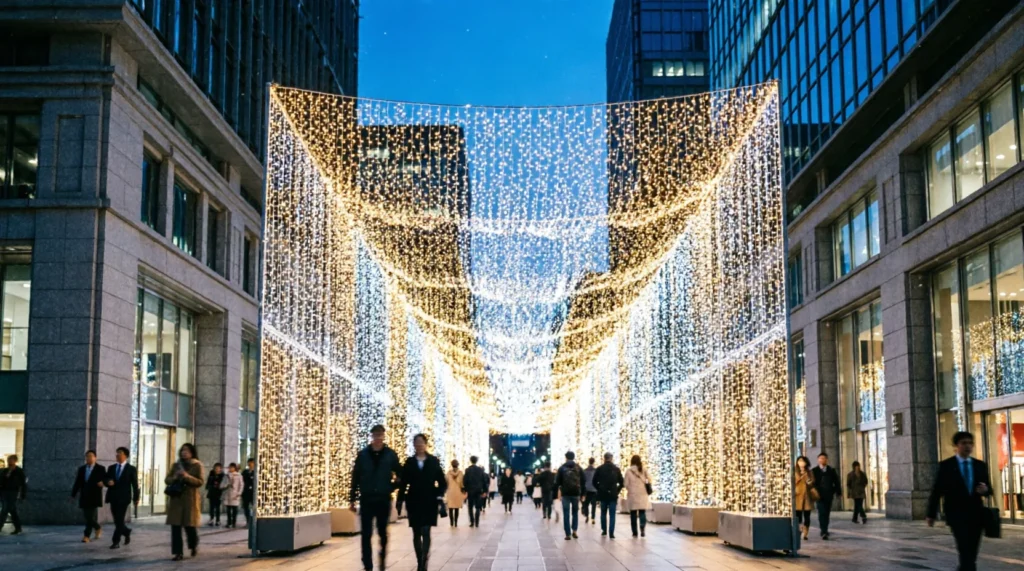
Tokyo at 4:45pm in December is already dark. The sky shifts from pale blue to indigo in minutes, and that’s when the city’s winter illuminations switch on—millions of LEDs transforming shopping districts into corridors of light. I stood on Omotesando last December watching couples photograph each other under champagne-colored bulbs while businesspeople walked past without looking up. For them, it was just Tuesday. For visitors, it’s one of Japan’s most underrated travel windows.
Japan in December sits between seasons: autumn crowds have left, New Year’s rush hasn’t arrived, and the weather is crisp without being brutal (except in Hokkaido, where it’s properly brutal). You get clear skies, world-class light displays, and the chance to see Japan’s holiday traditions without the domestic travel chaos that hits after December 28.
This guide covers what to expect from weather and crowds to costs, plus where to go, what to pack, and how to plan around the New Year’s closure period that catches every first-time visitor off guard.
Weather Breakdown
December weather in Japan depends entirely on latitude. Hokkaido averages -2°C to 4°C with regular snowfall—ski resorts in Niseko and Rusutsu open by mid-December. Tokyo sits at 5°C to 12°C with low humidity and minimal rain. Kyoto runs similar to Tokyo but feels colder in unheated temples and traditional buildings. Okinawa stays mild at 15°C to 20°C, though it’s too cool for beach weather.
Daylight is your limiting factor. Tokyo sees sunrise around 6:30am and sunset by 4:30pm. You have roughly 10 hours of light, less in the north. Plan outdoor activities for morning and early afternoon; save illuminations and indoor attractions for late afternoon and evening.
Rain is uncommon—December is one of Japan’s driest months. Snow in Tokyo is rare (maybe one day per year) but does happen. When it does, the city’s train system slows to a crawl. Check forecasts and allow extra transit time if snow is predicted.
Crowd Levels
Early to mid-December is one of Japan’s quietest travel periods. International tourism dips after autumn foliage season. Domestic travelers haven’t started moving yet. You’ll find manageable lines at major temples, available hotel rooms without advance booking (outside Kyoto), and restaurants that don’t require reservations weeks ahead.
The exception: illumination venues. Popular displays at Roppongi Hills, Marunouchi, and Nabana no Sato draw crowds after 6pm. Go before 5:30pm or after 8pm to avoid peak photo-taking hours.
The week between December 28 and January 3 is different. This is ōshōgatsu—New Year’s in Japan—and the busiest domestic travel period of the year. Shinkansen sell out. Hotels charge premium rates. Popular shrines for hatsumōde (first visit of the year) see hundreds of thousands of visitors. If you’re in Japan during this week, book everything now or accept that flexibility is gone.
Best Destinations
Tokyo dominates December for illuminations. The capital’s displays are sophisticated, not kitschy. Roppongi Hills features a 20-meter Christmas tree surrounded by 250,000 LEDs. Marunouchi’s Naka-dori Avenue suspends 600,000 champagne-gold bulbs overhead for a kilometer-long tunnel of light. Yebisu Garden Place installs 100,000 bulbs around a Baccarat crystal Christmas tree. None charge admission. All run from early November through mid-to-late December.
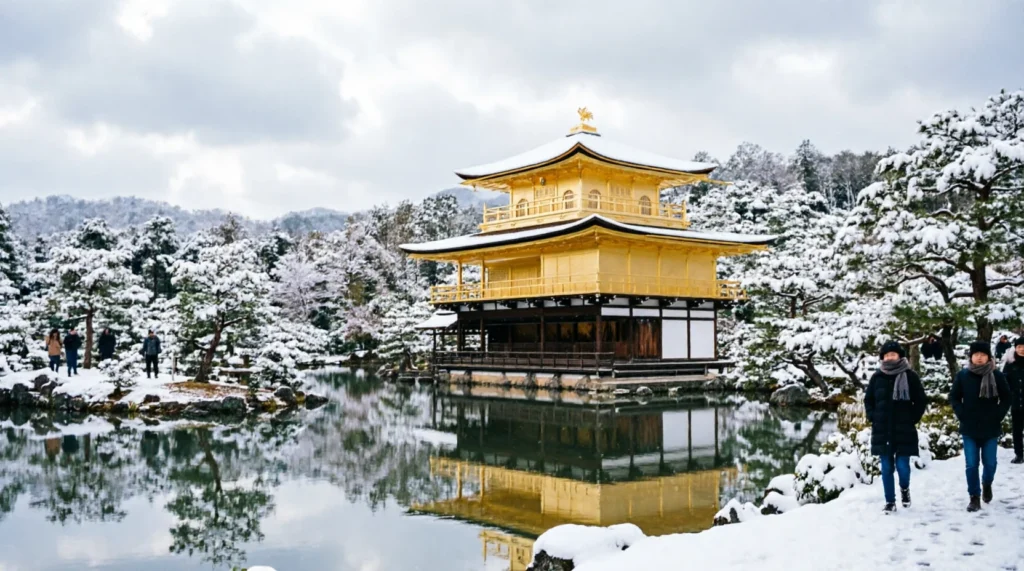
Kyoto in December offers a different appeal: fewer tourists at the temples you actually want to photograph. Kinkaku-ji (Golden Pavilion) looks sharper against winter sky than humid summer haze. Kiyomizu-dera’s wooden stage frames the city without autumn’s shoulder-to-shoulder crowds. If snow falls—and it does some years—the city transforms. Pack for cold: temple visits involve walking between unheated buildings on stone paths.
Hokkaido is for winter sports and snow festivals prep. Sapporo’s Christmas markets run through December 25. Ski resorts open by mid-month. The Sapporo Snow Festival doesn’t happen until February, but December offers the same cold with fewer tourists.
Honest negative: Nabana no Sato’s illumination in Mie Prefecture is Japan’s largest light display, and yes, it’s spectacular. But it’s also 90 minutes from Nagoya, requires advance timed-entry tickets, and draws 2 million visitors during the season. The crowds at peak hours diminish the experience. If you go, book the earliest entry slot (4pm) and visit on a weekday. Alternative: Tokyo’s smaller displays at Caretta Shiodome or Shinjuku Terrace City are free, accessible, and less exhausting.
Costs
December is shoulder season for pricing. Hotels cost 15-25% less than cherry blossom season (late March-early April) and autumn foliage (November). Expect ¥12,000-¥18,000 per night for a business hotel in Tokyo, ¥8,000-¥15,000 in Kyoto, and ¥15,000-¥25,000 in Hokkaido ski resorts (2025–2026 rates — verify before travel).
Flights from the US West Coast run $700-$1,200 roundtrip in early December, jumping to $1,400-$2,000 for December 20-January 5 travel. From Europe, expect €600-€900 off-peak, €1,000+ during New Year’s week.
Food costs don’t fluctuate seasonally. A bowl of ramen runs ¥900-¥1,200. Convenience store breakfast is ¥400-¥600. Mid-range restaurant dinner is ¥2,000-¥4,000 per person. Department store basement food halls (depachika) offer high-quality takeaway at moderate prices—ideal for picnics under illuminations.
The JR Pass price increased in October 2023 to ¥50,000 for 7 days. Run the math: a roundtrip Tokyo-Kyoto shinkansen ticket costs ¥28,000. You’d need to add at least one more long-distance trip (Kyoto-Hiroshima, Tokyo-Kanazawa, etc.) to break even. For a Tokyo-Kyoto-Osaka-Tokyo loop, the pass doesn’t pay off. Buy individual tickets or regional passes instead.
Events & Festivals
December 23 is a national holiday (Emperor’s Birthday, though this changes with the new emperor). Most businesses close. Plan accordingly.
Christmas is not a national holiday in Japan. December 25 is a regular workday. However, Christmas Eve functions as a romantic couples’ holiday—think Valentine’s Day in the West. Restaurants in major cities require reservations weeks ahead for December 24 dinner. Single travelers won’t find chaos, but couples-oriented venues will be booked.
New Year’s Eve (ōmisoka) is when Japan gathers. Temples hold joya no kane—bell-ringing ceremonies starting around 11pm. Zojoji Temple in Tokyo and Chion-in in Kyoto are the most famous. Trains in major cities run all night on December 31 into January 1 to accommodate shrine visitors.
Hatsumōde (first shrine visit of the year) happens January 1-3. Meiji Shrine in Tokyo sees 3 million visitors over three days. If you want the experience without the crush, go January 4 or later, or visit a neighborhood shrine instead of the famous ones.
What to Pack
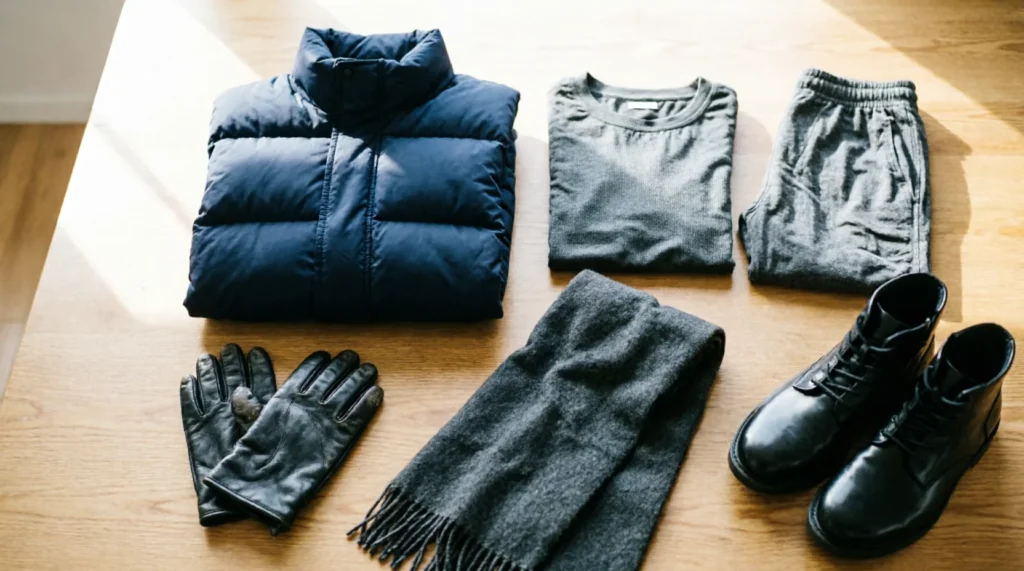
December demands serious winter gear for most of Japan. Bring:
- Insulated coat: Down jacket or wool coat rated to at least -5°C
- Layers: Thermal underwear (Uniqlo Heattech works), sweaters, long sleeves. Indoor heating is aggressive—dress in removable layers
- Waterproof shoes: Leather boots or waterproof sneakers. You’ll walk on cold stone and potentially wet pavement
- Accessories: Gloves, scarf, warm hat. Your extremities will get cold walking between train stations and temples
- Moisturizer: December air is dry. Skin cracks without hydration
- Portable hand warmers: Buy kairo at any convenience store for ¥40-50 each. They last 8-10 hours
Leave the umbrella at home unless you’re visiting the Sea of Japan coast (Kanazawa, Niigata), where snow is common. Tokyo and Kyoto see little December precipitation.
Sample Itinerary
5 Days: Tokyo Illuminations & Day Trips
Day 1: Arrive Tokyo. Evening walk through Marunouchi illumination (free, accessible from Tokyo Station). Dinner in Ginza.
Day 2: Morning at Meiji Shrine. Afternoon in Harajuku and Omotesando. Evening at Roppongi Hills illumination.
Day 3: Day trip to Nikko (2 hours by train). UNESCO World Heritage shrines in winter light. Return to Tokyo for Caretta Shiodome illumination near Tokyo Bay.
Day 4: Tsukiji Outer Market morning. Afternoon at teamLab Planets or Mori Art Museum. Evening at Shinjuku Terrace City illumination.
Day 5: Departure or extend to Kyoto (2.5 hours by shinkansen).
7 Days: Tokyo, Kyoto, and Osaka
Days 1-3: Tokyo as above.
Day 4: Shinkansen to Kyoto (reserve seats in advance). Afternoon at Kinkaku-ji. Evening at Arashiyama if illuminations are running (check dates—usually through late December).
Day 5: Kiyomizu-dera morning. Fushimi Inari afternoon (fewer crowds than summer). Evening Gion walk.
Day 6: Day trip to Nara (45 minutes by train). Todai-ji Temple and Nara Park. Return to Kyoto or continue to Osaka (30 minutes).
Day 7: Osaka morning (Dotonbori, Osaka Castle). Departure from Kansai International Airport or return to Tokyo.
Critical note: If your trip extends past December 28, book all hotels and shinkansen seats immediately. This is peak domestic travel season, and availability disappears.
Frequently Asked Questions About Japan in December
Is Japan crowded in December?
Early to mid-December sees moderate crowds. The week between December 28 and January 3 is peak domestic travel—avoid if possible. Popular illumination spots draw evening crowds, but temples and museums remain manageable.
Is December a good time to visit Japan?
Yes, if you prioritize illuminations, clear skies, and fewer tourists. Temperatures range from 2°C in Sapporo to 12°C in Tokyo. Ski season begins in Hokkaido. The trade-off: shorter daylight hours (sunset around 4:30pm in Tokyo) and some rural closures.
What should I pack for Japan in December?
Pack a warm coat (down jacket recommended), layers, thermal underwear for northern regions, waterproof shoes, gloves, and a scarf. Indoor heating is strong, so dress in removable layers. Most buildings maintain 20-23°C indoors.
Are shops and restaurants open during New Year’s in Japan?
December 29 through January 3 sees widespread closures. Department stores, banks, and many restaurants close. Convenience stores and major train stations remain open. Plan meals ahead and stock up on essentials before December 29.
Continue Exploring
- Complete Japan Travel Guide
Plan your entire Japan trip with our comprehensive guide covering itineraries, transportation, costs, and cultural etiquette across all seasons. - Tokyo in Winter: Beyond the Illuminations
Extend your December visit with our deep dive into Tokyo’s winter neighborhoods, hot springs, and indoor attractions perfect for cold days.