Tokyo first if you have 7 days or less, crave urban energy, or want maximum transport flexibility. Kyoto first if you’re prioritizing temples and traditional culture, traveling in cherry blossom season (late March–early April) when Kyoto’s crowds peak earlier than Tokyo’s, or prefer a slower pace to ease into Japan.
Both cities deserve your time. The Shinkansen connects them in 2 hours 15 minutes, making a two-city trip entirely feasible. But if you’re choosing one for a first visit, the decision comes down to what you want from Japan: the precision and possibility of the world’s largest metropolis, or the concentrated cultural heritage of the former imperial capital.
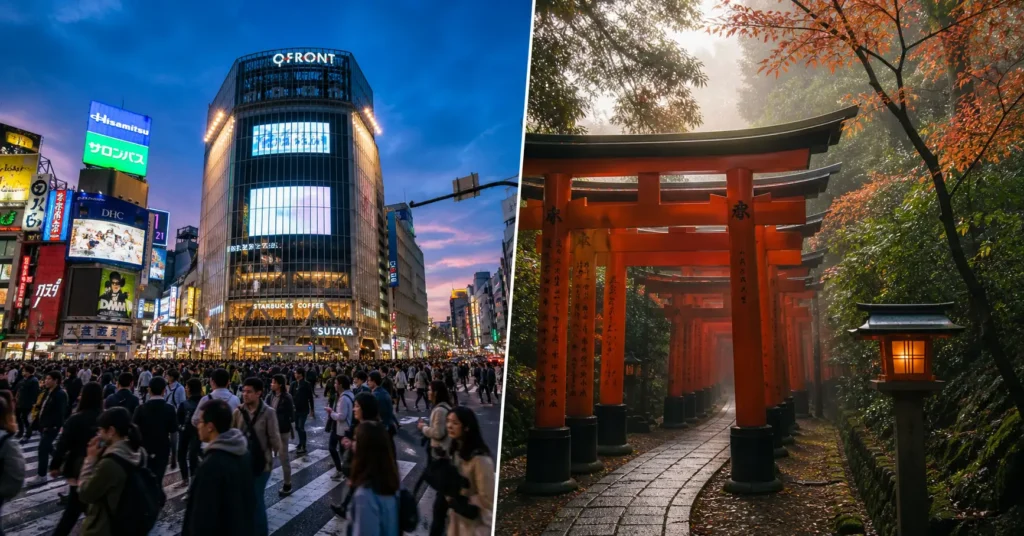
I landed at Narita at 6am on a Tuesday, rode the Narita Express into Tokyo, and by 9am was standing in a Shibuya coffee shop watching 300 people cross the intersection in perfect silence. Three days later, I sat on a wooden veranda in Kyoto watching a monk rake gravel into concentric circles at Ryoan-ji. Both moments defined Japan for me. Neither would have made sense without the other.
This post compares Tokyo vs Kyoto on logistics, costs, and experience—then gives you a verdict based on your travel style, not generic advice.
Overview
Tokyo and Kyoto are not competing destinations. They’re complementary. Tokyo is Japan’s engine—13 million people, 23 wards, infinite neighborhoods, and a transportation system that operates within 30 seconds of schedule. Kyoto is Japan’s memory—over 1,600 Buddhist temples, 400 Shinto shrines, and 17 UNESCO World Heritage Sites packed into a city of 1.5 million.
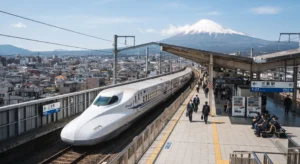
The distance between them: 476 kilometers. The travel time: 2 hours 15 minutes on the Nozomi Shinkansen. The cultural distance: harder to measure, but significant.
Tokyo rewards curiosity and pace. You can eat ramen at a six-seat counter in Shinjuku at 11pm, visit a teamLab digital art installation at midnight, and watch the sunrise from Shibuya Sky—all in one night. Kyoto rewards patience and presence. The best temple visits happen at 7am before the tour buses arrive. The best meals happen at restaurants without menus, where you point at what the person next to you is eating.
Neither city is “more Japanese” than the other. That framing misses the point. Tokyo shows you Japan’s present. Kyoto shows you Japan’s past. You need both to understand the whole.
Key Differences
Tokyo: The Urban Machine
Tokyo runs on systems. The subway has 13 lines operated by two different companies (Tokyo Metro and Toei), but a single IC card (Suica or Pasmo) works on all of them, plus buses, plus convenience stores, plus vending machines. Trains arrive within 30 seconds of their posted time. Platform markers show you exactly where to stand so you board efficiently.
The city is organized into distinct neighborhoods, each with its own character. Shibuya is youth culture and nightlife. Asakusa preserves old Tokyo with Senso-ji Temple and traditional shops. Shinjuku is business by day, entertainment by day. Harajuku is fashion and pop culture. You don’t “see Tokyo”—you see specific neighborhoods, and you need at least 4–5 days to cover the essentials without rushing.
Food ranges from ¥500 convenience store onigiri to ¥30,000 omakase sushi. The ramen at a ¥900 counter in Shinjuku will reset your expectations. Department store basements (depachika) offer prepared food so high-quality that locals buy dinner there nightly.
The negative: Tokyo can feel overwhelming. The sensory input is constant. If you’re jet-lagged or need quiet, the city doesn’t accommodate easily. Noise levels are lower than Western cities—nobody talks on phones on trains—but the sheer density of people never stops.
Alternative: Base yourself in a quieter neighborhood like Yanaka or Kagurazaka while still accessing central Tokyo. These areas have traditional atmosphere and fewer crowds, but you’re still 20 minutes from Shibuya by train.
Kyoto: The Cultural Archive
Kyoto is smaller, slower, and more concentrated. The city was spared bombing in World War II, so it retains wooden machiya townhouses, temple gardens, and geisha districts that Tokyo lost decades ago. The grid system makes navigation simpler than Tokyo’s organic sprawl.
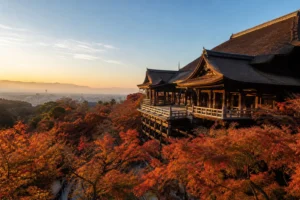
The temple circuit is the main attraction: Kinkaku-ji (Golden Pavilion), Fushimi Inari Shrine with its thousands of vermilion torii gates, Kiyomizu-dera with its wooden stage overlooking the city, and Ryoan-ji’s rock garden. Each requires different timing. Fushimi Inari is best at 7am or after 5pm to avoid crowds. Kinkaku-ji is best mid-morning when light hits the gold leaf. Kiyomizu-dera is best late afternoon when day-trippers leave.
Kyoto’s food scene is quieter but exceptional. Kaiseki (multi-course traditional dining) originated here. Nishiki Market offers street food and ingredients. A bowl of yudofu (tofu hot pot) at a temple restaurant costs ¥2,000–3,000 and takes 45 minutes to eat properly.
The negative: Kyoto’s popularity has created overtourism. Tour buses clog narrow streets in Higashiyama. Some temples now charge ¥1,000+ entrance fees and still have lines. Geisha spotting in Gion has become a spectator sport that locals resent.
Alternative: Visit temples outside the main circuit—Sanjusangen-do has 1,001 life-size statues of Kannon and fewer crowds. Explore northern Kyoto (Ohara) or western Kyoto (Arashiyama’s lesser-known temples) where visitor density drops significantly.
For First-Time Japan Visitors
Choose Tokyo first if this is your first trip to Japan and you have 7–10 days total.
Reason: Tokyo is easier logistics. Narita and Haneda airports connect directly to the city via express trains (Narita Express: ¥3,070, 60 minutes; Haneda monorail: ¥500, 20 minutes). English signage is everywhere. Convenience stores (7-Eleven, Lawson, FamilyMart) solve every problem—ATMs that accept foreign cards, heated meals, toiletries, and SIM cards.
Tokyo also acclimates you to Japanese systems before you hit the cultural sites. You’ll learn how to use IC cards, navigate trains, order from vending machines, and understand basic etiquette (no eating while walking, quiet on trains, trash separation) in a city designed for efficiency. Once you’ve mastered Tokyo, Kyoto feels simpler.
If you’re doing 7 days: spend 4 in Tokyo, 3 in Kyoto. Take the Shinkansen on day 5. This gives you Tokyo’s neighborhoods (Shibuya, Asakusa, Shinjuku, Harajuku) plus Kyoto’s essentials (Fushimi Inari, Kinkaku-ji, Kiyomizu-dera, Gion).
Budget reality 2025–2026: Tokyo costs ¥12,000–15,000/day for budget travelers (hostel ¥4,500, meals ¥4,000, transport ¥1,500, activities ¥2,000). Kyoto runs ¥10,000–13,000/day (hostel ¥3,500, meals ¥3,500, transport ¥1,000, temple fees ¥2,000). These are real numbers, not the outdated $50/day myth.
(2025–2026 rates — verify before travel)
For Return Visitors or Culture-Focused Travelers
Choose Kyoto first if you’ve been to Japan before, or if your priority is temples, gardens, and traditional culture over urban exploration.
Reason: Kyoto’s cultural sites require specific timing and patience that first-timers often underestimate. The temples open at 8–9am and close at 4–5pm. The best light and smallest crowds happen outside these windows. If you’re culture-focused, you’ll want to visit multiple temples per day, which means early starts and strategic routing.
Kyoto also rewards slower travel. A single temple garden can occupy an hour if you sit and watch. A kaiseki dinner takes 2–3 hours. The city’s pace assumes you’re not rushing to the next thing.
If you’re a return visitor, you’ve probably already done Tokyo’s highlights. This trip is about depth: staying in a ryokan (traditional inn) in Higashiyama, taking a tea ceremony class in a machiya, visiting temples in Ohara or Kurama that most tourists skip, or hiking the Philosopher’s Path in early morning.
One stop beyond the obvious: Add Nara as a day trip from Kyoto (45 minutes by train). Todai-ji Temple houses a 15-meter-tall bronze Buddha and a building that’s one of the world’s largest wooden structures. Nara’s deer park is 10 minutes away—over 1,000 semi-wild deer roam freely and will bow to you for senbei crackers. It’s touristy, yes, but genuinely memorable.
Cost Comparison
Accommodation (per night, 2025–2026 rates):
- Tokyo budget hostel: ¥4,500–6,000
- Kyoto budget hostel: ¥3,500–5,000
- Tokyo mid-range hotel: ¥12,000–18,000
- Kyoto mid-range hotel: ¥10,000–15,000
- Tokyo business hotel (APA, Dormy Inn): ¥8,000–12,000
- Kyoto ryokan (traditional inn): ¥15,000–30,000 with dinner/breakfast
Food (per meal):
- Tokyo ramen: ¥800–1,200
- Kyoto ramen: ¥800–1,100
- Tokyo convenience store breakfast: ¥500–700
- Kyoto convenience store breakfast: ¥500–700
- Tokyo mid-range restaurant dinner: ¥2,000–4,000
- Kyoto kaiseki dinner: ¥8,000–20,000
- Tokyo coffee: ¥400–600
- Kyoto matcha tea ceremony: ¥1,500–3,000
Transport:
- Tokyo subway day pass: ¥800–1,200 depending on zones
- Kyoto bus day pass: ¥700 (unlimited city buses)
- Tokyo–Kyoto Shinkansen (one way, non-reserved): ¥14,000
- Tokyo–Kyoto Shinkansen (one way, reserved): ¥14,500
- JR Pass 7-day: ¥50,000 (2025 rate—only worth it if doing round-trip Tokyo–Kyoto plus additional long-distance travel)
Activities:
- Tokyo museums: ¥500–2,000
- Kyoto temple entrance: ¥300–1,000 (major temples ¥600–1,000)
- Tokyo teamLab Planets: ¥3,200
- Kyoto tea ceremony: ¥3,000–5,000
Overall: Kyoto is 15–20% cheaper than Tokyo, mainly due to lower accommodation costs and free temple grounds (you only pay for building entry). However, if you’re doing kaiseki dinners or staying in ryokans, Kyoto can exceed Tokyo’s costs quickly.
Final Recommendation
Choose Tokyo first if:
- You have 7 days or less total
- This is your first trip to Japan
- You want urban energy, nightlife, and variety
- You prefer efficient transport and English signage
- Your budget is ¥12,000–15,000/day
- You’re traveling with kids who need constant stimulation
Choose Kyoto first if:
- You have 10+ days total
- You’ve been to Japan before
- Your priority is temples, gardens, and traditional culture
- You prefer slower pace and don’t mind less English
- Your budget is ¥10,000–13,000/day
- You’re traveling in cherry blossom season and want to hit Kyoto’s peaks before Tokyo’s
The real answer: Do both. Spend 4 days in Tokyo, 3 in Kyoto. Take the Shinkansen between them. You’ll leave understanding that Japan isn’t one thing—it’s a conversation between past and present, and both cities are essential voices.
Japan travel guide — Complete planning resource covering visas, transport, etiquette, and itineraries for your entire Japan trip.
Frequently Asked Questions About Tokyo vs Kyoto
How many days do I need in Tokyo vs Kyoto?
Tokyo needs 4–5 days minimum to cover distinct neighborhoods like Shibuya, Asakusa, and Shinjuku without rushing. Kyoto requires 3–4 days to visit major temples (Kinkaku-ji, Fushimi Inari, Kiyomizu-dera) plus one day trip to Nara or Arashiyama. If you have 7 days total, split 4 Tokyo / 3 Kyoto.
Is the JR Pass worth it for Tokyo to Kyoto?
For a one-way Tokyo–Kyoto trip, no. The 7-day JR Pass costs ¥50,000 (2025 rate). A one-way Shinkansen Nozomi ticket is ¥14,000. You’d need ¥50,000+ in JR travel within 7 days to break even—typically requiring round-trip Tokyo–Kyoto plus additional long-distance travel. Buy individual tickets instead.
Can I do Tokyo and Kyoto in one trip?
Yes. The Shinkansen (bullet train) connects Tokyo to Kyoto in 2 hours 15 minutes on the Nozomi. Trains depart every 10 minutes during peak hours. Book non-reserved seats for flexibility or reserve ahead during cherry blossom season (late March–early April) and autumn foliage (November).
Which is cheaper: Tokyo or Kyoto?
Kyoto is 15–20% cheaper overall. Budget accommodation: Tokyo ¥4,500–6,000/night vs Kyoto ¥3,500–5,000/night (2025–2026 rates). Meals are comparable—both cities offer ¥800–1,200 ramen and ¥500 convenience store options. Tokyo’s nightlife and entertainment push daily budgets higher.
Continue Exploring
- 10-day Japan itinerary — See exactly how to structure 10 days across Tokyo, Kyoto, and one additional stop with transport timing and hotel recommendations.
- Osaka vs Tokyo — If you’re considering adding a third city, compare Osaka’s food scene and nightlife against Tokyo’s urban scale.