Lisbon does not welcome you gently. It demands that you look down at your feet, then up at the skyline, then back down again. The limestone sidewalks are polished smooth by a century of footsteps, and the hills rise sharply enough to make you reconsider your packing choices by noon. Most first-time visitors expect a flat coastal stroll. They pack the wrong shoes and burn through half their energy before the first afternoon ends. I learned that the hard way, standing on Rua Augusta at 2 PM in July, watching a taxi crawl past while sweat soaked through a linen shirt I should have never worn on a walking day. That moment recalibrated everything.
This lisbon travel guide maps out exactly how to structure four days here without wasting time on transit guesswork or tourist traps. You will get neighborhood layouts that actually make logistical sense, transit breakdowns that work on your second hour in the city, and a cost framework that matches reality rather than brochure fiction.
Quick Overview
Lisbon sits on the Tagus River estuary, built across seven hills that dictate every walking route. The city divides into distinct zones: Baixa (the flat, grid-like commercial center), Alfama and Mouraria (the oldest, winding medieval quarters climbing the eastern hill), Chiado and Bairro Alto (the cultural and evening core on the western slope), and Belém (the riverside historic district two kilometers west of downtown). You do not need to cross the entire map to experience the city, but you must respect elevation. What looks like a five-minute walk on paper often translates into twenty minutes of switchbacks and staircases.
For non-EU visitors, Portugal operates within the Schengen zone. You may stay up to 90 days within any 180-day window without a long-stay visa. (Verify at [official source] — rules change without notice). First-timers navigating visiting lisbon should anchor their stay near Baixa, Chiado, or Rossio. These areas place you on flat ground with direct Metro access, reducing the need to haul luggage up steep inclines or rely on expensive rideshares during peak hours.
Top Things to Do
Skip the checklist mentality. Lisbon rewards focused movement, not scattered stops. Start your mornings in the eastern neighborhoods before the cruise passengers arrive. Walk Rua dos Correeiros into Mouraria, turn left at Martim Moniz, and follow the scent of grilled sardines and tile dust toward Castelo de São Jorge. The castle itself charges €10 and delivers sweeping views, but the surrounding residential alleys hold the actual texture of the city. You will hear fado practicing behind unmarked wooden doors. You will pass padarias where locals queue for bifana sandwiches wrapped in parchment paper.
Belém is non-negotiable but frequently mishandled. Most visitors hit the Jerónimos Monastery, fight through a forty-minute line for the original pastéis de nata shop, and retreat to the train station. The monastery closes early on Mondays. The famous pastry window stretches around the block with a dedicated tourist lane that moves slowly. The honest alternative sits twenty meters away on Rua de Belém: Manteigaria bakes in smaller batches, uses the exact same custard ratio, and rarely requires you to stand in the sun. Eat standing up. The paper cup keeps your fingers clean. The taste explains why the neighborhood built an empire around a single pastry.
The MAAT museum and LX Factory draw weekend crowds from across Portugal. The museum sits on a decommissioned power station platform at Belém’s western edge, charging €11 for contemporary exhibitions that rotate quarterly. LX Factory operates under a massive 19th-century printing press canopy in Alcântara, hosting independent bookstores, ceramic studios, and restaurants that price for locals rather than airport travelers.
Where to Stay
Neighborhood choice dictates your daily energy expenditure. Baixa and Chiado offer flat pavement, direct Metro lines (Blue and Green), and immediate access to historic sites. The trade-off is noise. Rua dos Fanqueiros and Praça do Comércio draw delivery trucks until midnight. If you sleep lightly, book an interior-facing room or push north toward Restauradores. The streets quiet after 8 PM, and you remain five minutes from the Baixa grid.
Graça and Campo de Ourique appeal to travelers who prefer residential rhythm over commercial density. Graça sits above Alfama, connected by the Elevador da Graça and a network of stairways that locals use instead of main roads. Campo de Ourique operates as a working-class grid with the Mercado de Campo de Ourique on its western edge. Both areas require a short bus or Metro transfer to the center, but you will pay 15–20% less for comparable square footage. First-timers visiting lisbon for the first time should prioritize proximity to a Metro station over aesthetic charm. Carrying a backpack up Calçada do Duque with wheels that catch on uneven basalt stones becomes a daily friction point.
Getting Around
The Lisboa Card covers unlimited public transit and free museum entry, but it only makes financial sense if you plan to visit three or more paid attractions in a 24-hour period. For straightforward transit navigation, the 24-hour Viva Viagem card costs €6.40 for unlimited Metro, bus, tram, and elevator rides. You tap it at every yellow validator inside the vehicle. The system does not scan on entry; it random-checks on board.
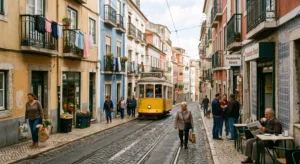
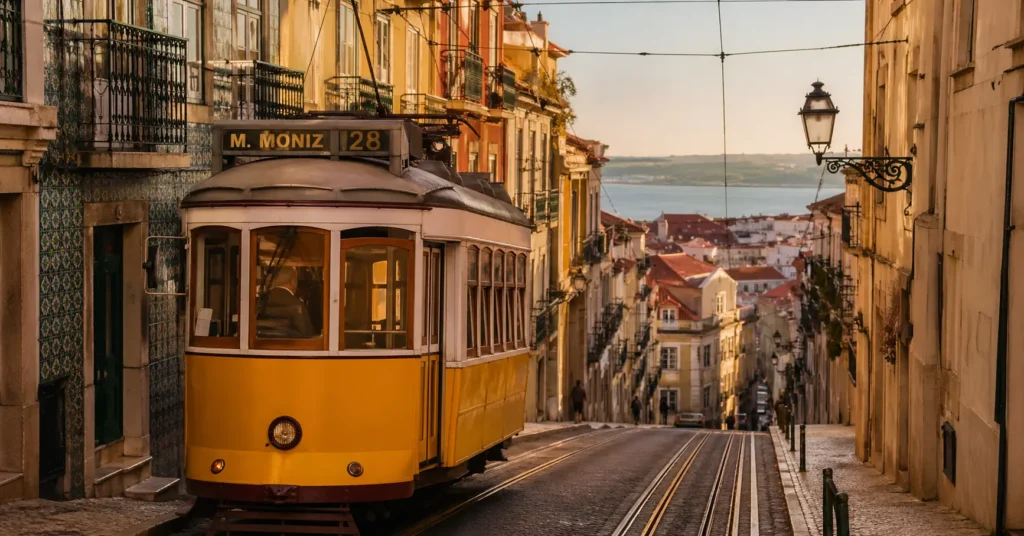
Tram 28 runs the full tourist circuit from Martim Moniz to Campo de Ourique. It is the most photographed route in the city and the most frustrating to board during peak hours. The practical approach: catch it at the final stop in Campo de Ourique before 8:30 AM, or wait for Tram 12, which covers the Alfama and Graça loop with significantly lower passenger volume. Both accept the same transit pass. Taxis and Bolt operate reliably, but prices spike during shift changes at 8 PM and 2 AM when drivers rotate. Walking remains the most efficient method for distances under 1.5 kilometers, provided you respect hill gradients.
Budget Guide
Lisbon falls into Portugal’s southern cost tier. A realistic baseline for visiting lisbon without extreme budgeting runs $90–$130 per day, assuming double occupancy accommodation and two meals eaten out. (2025–2026 rates — verify before travel). Western European capitals sit higher. You will notice the gap immediately.
Coffee at a neighborhood counter costs €0.90–€1.20. A full prato do dia (daily special with drink, soup, main, and dessert) at a family-run tasca in Alvalade or Marvila runs €12–€16. Tourist-facing restaurants in Chiado and Baixa charge €22–€35 for equivalent portions. The difference comes from location markup, not ingredient quality. Tap water is safe and routinely served free in ceramic jugs at traditional spots. You do not need to buy bottled water unless you prefer carbonated.
Accommodation ranges from €45–€70 per night for a private room in a central guesthouse to €110–€180 for a mid-range hotel with elevator access. Hostels in Penha de França and Intendente drop dorms to €25–€35 but require climbing steep stairs or walking fifteen minutes from the nearest Metro. If your lisbon vacation guide budget leans tight, eat your largest meal at lunch. Restaurants post the same menu twice daily, but lunch prices drop 15–20% to match local dining habits.
Sample Itinerary
Day 1 lands in Baixa and Chiado. Walk Praça do Comércio to Rua Augusta, turn right into Armazéns do Chiado, then climb to Carmo Convent. The roofless Gothic arches sit beside a small archaeological museum that explains why the neighborhood looks exactly like it does. Descend through Rua Garrett, grab a pastel at Fabrica da Nata, and rest in Jardim de São Pedro de Alcântara before dinner.
Day 2 moves east. Start at Miradouro da Graça at 7 AM for unobstructed river light. Walk down into Alfama, trace the path to São Jorge Castle, and loop through the Fado Museum. Take Tram 12 back toward Martim Moniz. Eat in Mouraria.
Day 3 covers Belém. Train from Cais do Sodré takes twenty minutes. Visit Jerónimos Monastery first, walk past the Belém Tower, cross the park to MAAT, and return via LX Factory. Keep your transit card active.
Day 4 stays flexible. Rent a bike along the riverside toward Parque das Nações, or ride the Metro to Sintra for the Pena Palace. Schedules change — confirm before travel. If rain arrives, shift to the Calouste Gulbenkian Museum and the elevated garden paths behind it.
Pro Tips
The city operates on a different clock. Breakfast runs 7–10 AM. Lunch service peaks at 1–3 PM. Dinner reservations before 8 PM often find empty dining rooms. Many kitchens close between 3:30 PM and 7:30 PM. You will not starve, but you will not find hot meals during the gap. Keep a small supply of snacks or target cafés that serve continuous torresmos and pão com chouriço.
Sunday mornings transform commercial streets. Rua Augusta and Avenida da Liberdade feel unusually quiet until noon. Use this window for photography or slow museum visits. Monday mornings shut smaller independent shops and a handful of local museums. The Jerónimos Monastery follows this rule. Plan around it.
The hills will expose weak footwear. Leather soles slip on wet limestone. Rubber tread with shallow lugs handles polished stone better than heavy hiking boots. Carry a compact umbrella from October through April. Summer heat pushes past 35°C with limited shade on exposed tram stops. Hydration stations at Jardim da Estrela and Parque Eduardo VII filter tap water cleanly and provide free refill access.
Frequently Asked Questions About Lisbon
Is Lisbon safe for first-time visitors?
Yes. Violent crime is rare. The primary risk is petty theft on crowded Tram 28 and in Rossio Square. Keep valuables in a front-zip pocket, use a crossbody bag with a flap, and treat busy tourist spots like any major European capital.
How many days do you need in Lisbon?
Four full days cover the historic core, Belém museums, a Sintra day trip, and one afternoon for neighborhoods like Graça or Campo de Ourique. Three days forces cuts. Five allows a slower pace or a quick Évora overnight.
Do you tip restaurants in Portugal?
Service is included by law. Rounding up to the nearest euro or leaving 5–10% in cash is customary for good service. Never feel pressured to add 15% or split a bill mathematically; locals leave coins or small bills directly on the table.
Continue Exploring
- Complete Portugal travel guide → Expand your route beyond Lisbon with regional breakdowns covering the Algarve coast, Porto, and the interior mountain routes.
- Sintra day trip from Lisbon→ Navigate the train schedule, palace ticket tiers, and walking loops that keep you out of the tour bus traffic.