Planning florida in summer is a logistics challenge that rewards the bold and humbles the unprepared. While the thermal reality of July and August can feel like standing behind a jet engine, the season offers a strategic advantage for those who prioritize their wallets over their comfort. From significant hotel discounts to empty restaurant patios, the “off-season” is Florida’s best-kept financial secret, provided you know how to navigate the 3:00 PM deluge and the Atlantic’s tropical temperament.
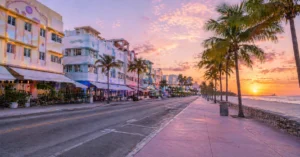
Florida’s summer is not a monolith, but the heat is universal. The state is a peninsula, meaning the humidity is fueled by the warm waters of the Gulf of Mexico and the Atlantic. In Orlando, the lack of a sea breeze makes the heat feel trapped. In South Beach, you get a slight Atlantic breeze, but the dew point remains high enough to keep the pavement steaming.
Overview: The 95°F Trade-Off
The Florida summer is defined by a “wet-bulb” humidity that makes 90°F (32°C) feel significantly more oppressive than the same temperature in the desert Southwest. You are trading perfect beach weather for affordability.
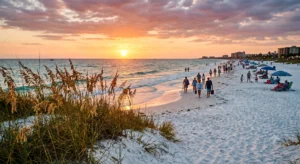
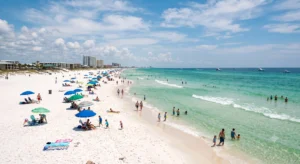
- Crowd Levels: Generally lower in South Florida and the Keys; however, the Florida Panhandle (Destin/30A) hits peak capacity as regional travelers from the South flock to the coast.
- Cost Premium: Negative in the south. This is the “Value Season” where luxury stays in Miami or Orlando become accessible to mid-range budgets.
- The Hurricane Factor: June marks the start of the season, but August is when the risk truly ramps up. (Verify at NHC.noaa.gov — rules change without notice).
Expect afternoon highs of 92°F–95°F (33°C–35°C) across the state. The “RealFeel” or heat index frequently hits 105°F (41°C). If you are doing Disney or Universal, the asphalt in the parks acts as a massive radiator, adding another 5 degrees to the perceived temperature.
Key Information
To survive visiting florida summer, you must respect the two forces that dictate the daily schedule: the sun and the storms.
Regional Temperature Averages (June–August)
| Region | Avg High | Avg Low | Experience Note |
|---|---|---|---|
| Miami/South Florida | 90°F (32°C) | 78°F (26°C) | Breezy but extremely humid. |
| Orlando/Central | 92°F (33°C) | 75°F (24°C) | Oppressive midday sun; no breeze. |
| Destin/Panhandle | 89°F (31.6°C) | 74°F (23°C) | Peak season; crowded but slightly cooler. |
The 2026 Hurricane Rules
Hurricane season officially begins June 1 and runs through November 30. (Verify at [official source] — rules change without notice). In 2026, forecasts suggest a near-normal season, but a “normal” season still involves 14 named storms. While the statistical probability of a major hurricane hitting during your specific 7-day window is low, tropical storms frequently cause flight delays and outdoor closures.
Experience Signal: I stood in line for Slinky Dog Dash at Hollywood Studios last July at 11:30 AM. Even with the misting fans, two people in my vicinity had to sit down due to heat exhaustion. If you aren’t drinking a liter of water every two hours, you are doing it wrong.
Practical Tips for the Summer Traveler
- The 10-to-4 Rule: Do not plan outdoor activities between 10:00 AM and 4:00 PM. This is when the UV index peaks and the heat becomes dangerous.
- Hydration Logistics: Water in theme parks can cost $5 per bottle. Carry a filtered, insulated bottle; the tap water in many parts of Florida has a distinct sulfur taste that is unpalatable when warm.
- Dress for Dampness: Wear linen or high-performance moisture-wicking fabrics. Cotton stays wet for hours after a 3:00 PM rain shower.
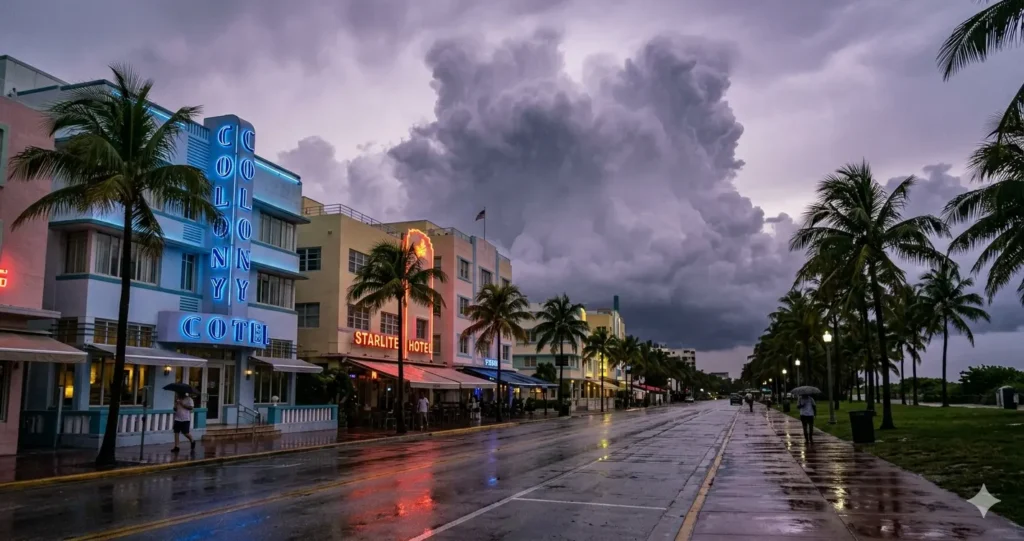
- The 24-Hour Rain Rule: Afternoon thunderstorms happen almost every day between 3:00 PM and 5:00 PM. Do not plan outdoor boat tours or expensive photography sessions during this window.
The Cost of a Florida Summer: 2026 Budget Tiers
- Budget ($95–$140/day): Staying in Kissimmee or Miami Airport zones. Eating at Cuban ventanitas (windows) for $8 sandwiches.
- Mid-Range ($220–$350/day): A boutique hotel on Washington Ave in South Beach. Includes one sit-down meal and rideshares.
- Luxury ($600+/day): Oceanfront resorts like the Four Seasons Surfside. Expect $25 cocktails and $150+ dinner tabs.
Recommendations: Where to Go (and What to Skip)
SKIP: The Everglades in July
Guidebooks often list the Everglades as a “must-visit,” but in the summer, it is a mosquito-infested swamp with zero shade. Many hiking trails are underwater, and the heat is unbearable.
- DO INSTEAD: Visit Ginnie Springs or Kelly Park (Rock Springs) in Central Florida. The water stays a constant 72°F (22°C) year-round. Tubing down a crystal-clear spring is the only way to stay sane in July.
SKIP: Midday Theme Park Marathons
Trying to “power through” Magic Kingdom at noon is a recipe for a meltdown.
- DO INSTEAD: Utilize “Early Entry” at 7:30 AM. Be back at the hotel pool by 11:30 AM, and don’t return to the parks until after the 4:00 PM rain clears the air.
GO: South Beach for the “Splurge for Less”
Because it is the off-season for South Florida, 5-star resorts in areas like Sunny Isles or Bal Harbour often drop their rates to mid-range levels. I stayed at a 4-star property in Brickell last August for $195/night—that same room in February goes for $520.
FAQ
Is it too hot to visit Florida in July?
July is the peak of the “heat dome” effect. Highs average 92°F (33°C), but the humidity is the real killer. It is only manageable if you stay near water or stay indoors between noon and 5:00 PM. If you have underlying health issues sensitive to heat, avoid Florida this month.
Is Florida cheaper in the summer?
Yes, specifically in South Florida (Miami, Fort Lauderdale, Palm Beach). Hotels slash prices by 40–50% to lure guests during the heat. However, the Panhandle and northern springs are at their most expensive during the summer months.
Does it rain every day in Florida during the summer?
Statistically, yes. Expect a “pop-up” thunderstorm around 3:00 PM. These are usually violent but short, lasting 30 to 90 minutes. They provide a temporary temperature drop, though the humidity spikes immediately afterward. (Schedules change — confirm before travel).
Continue Exploring
Florida Travel Guide: The master blueprint for navigating the Sunshine State, covering everything from the Gulf Coast’s white sands to the Atlantic’s surf breaks.
US National Parks Guide: If the Florida heat is too much, explore the higher elevations and cooler climates of the Western National Parks.