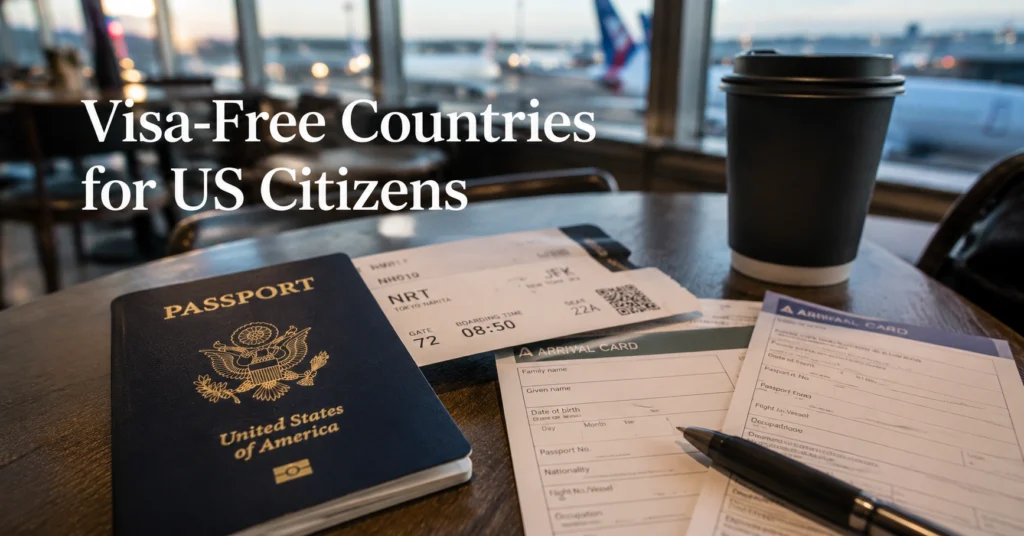
US citizens can enter more than 180 countries and territories either visa-free, with visa on arrival, or through a quick online authorisation system in 2026. That does not mean you can show up anywhere with only a passport and optimism. Some countries require proof of onward travel.
Others require hotel bookings, arrival forms, vaccination certificates, or an electronic travel authorisation before boarding. Airlines deny boarding for missing paperwork long before immigration officers get involved.
The expensive mistake isn’t usually the visa itself. It’s misunderstanding the category. I’ve watched travellers argue at airline counters in Cairo, Bangkok, and Lisbon because they confused “visa-free” with “no preparation required.” Those are different things. One saves paperwork. The other barely exists anymore.
Before you book anything, you need to know three things:
- whether your destination is genuinely visa-free,
- how long you can legally stay,
- and what additional entry systems now sit between your passport and the gate.
And yes — Europe changes again in 2026.
Quick Overview
| Region | US Passport Access | Typical Stay Limit | Extra Requirement |
|---|---|---|---|
| Schengen Europe | Visa-free | 90 days in 180 | ETIAS authorisation expected in 2026 |
| UK | Visa-free | 6 months | ETA rollout expanding |
| Japan | Visa-free | 90 days | Return/onward proof sometimes checked |
| Thailand | Visa-free | 30–60 days depending on policy updates | Arrival card rules can change |
| Mexico | Visa-free | Up to 180 days | Tourist card requirements vary |
| UAE | Visa-free on arrival | 30 days | Passport validity strictly enforced |
| Vietnam | E-visa required | 90 days | Online application before arrival |
| Egypt | Visa on arrival or e-visa | 30 days | $25 fee |
| Australia | ETA required | 90 days | Online authorisation mandatory |
Visa-Free Countries for US Citizens in 2026 — The Direct Answer Before You Book
US passport holders have some of the broadest travel access in the world in 2026, but the practical reality is more layered than the rankings suggest. Europe remains largely visa-free for Americans, most of Latin America allows easy entry, and large parts of Asia permit short tourist stays without advance visas. But “easy” travel increasingly means digital pre-clearance systems rather than pure walk-in access.
The distinction matters because airlines enforce these rules aggressively. Immigration officers decide entry after landing. Airlines decide whether you board at all.
The first time you encounter this is usually at check-in. The agent asks for your onward ticket. Then proof of accommodation. Then whether you’ve completed the ETA or ETIAS registration you didn’t know existed. That’s when people start scrolling through government sites in airport Wi-Fi that barely works.
Don’t be that person.
What “Visa-Free” Actually Means — And Why People Get This Wrong at Airports
Visa-free travel means you do not need to apply for a traditional visa before arrival, but it does not mean unconditional entry.
This is where first-time international travellers get burned. The phrase sounds simpler than the reality.
Visa-free
Visa-free means you can enter without applying for a visa beforehand. Immigration stamps your passport on arrival. Europe’s Schengen Area works this way for US citizens for stays under 90 days within a 180-day period.
That 90-day clock applies across the entire Schengen zone collectively — not per country. Spain plus Italy plus France still counts as one total. People overstay accidentally every summer because they assume crossing borders resets the timer. It doesn’t.
Visa on arrival
Visa on arrival means you receive the visa after landing and usually pay a fee at the airport.
Egypt is the classic example. At Cairo International Airport, the Bank of Egypt visa counter sits immediately after arrival doors and before immigration queues. Miss it and you’ll stand in the passport line only to get sent back for the sticker. At 1am after a delayed flight, that feels much longer than it sounds.
Egypt’s tourist visa costs $25. Cash speeds this up considerably.
(2025–2026 rates — verify before travel)
E-visa
An e-visa is a visa you apply for online before departure.
Vietnam requires this for most US passport holders. The official government portal issues 90-day tourist e-visas, but the photo requirements reject surprising numbers of applications. White background. No shadows. No glasses. People ignore this, upload a cropped holiday photo, and then wonder why approval stalls.
Apply only through the official Vietnam Immigration Department portal.
(Verify at official source — rules change without notice)
ETA and ETIAS
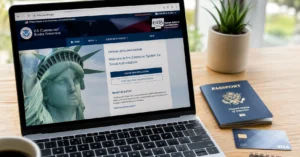
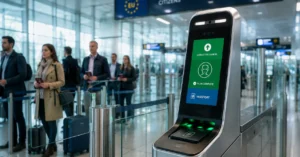
An ETA is a digital travel authorisation linked electronically to your passport. It is not technically a visa, but airlines treat it almost the same operationally.
Europe’s ETIAS system is expected to apply to Americans entering most Schengen countries beginning in 2026. The UK has also expanded ETA requirements.
This is the future direction of travel globally: fewer physical visas, more digital pre-clearance.
The Countries Americans Can Visit Without a Visa Right Now
US citizens can travel visa-free or with simplified entry to most major leisure destinations worldwide, but the length of stay and entry conditions vary substantially.
Europe
Most of Europe remains visa-free for Americans for up to 90 days within a 180-day Schengen period.
Countries include:
- France
- Italy
- Spain
- Portugal
- Germany
- Greece
- Netherlands
- Norway
- Switzerland
The UK separately allows Americans to stay up to six months for tourism. Ireland permits 90 days.
The practical issue in Europe isn’t the visa. It’s the Schengen clock. People planning multi-country trips routinely underestimate how quickly 90 cumulative days disappear.
trip planning pillar helps if you’re trying to map multiple countries into one legal itinerary without accidentally overstaying.
Asia
Japan, South Korea, Malaysia, Singapore, and the Philippines remain straightforward for US tourists.
Thailand changes policies often enough that you should verify the current stay length before departure rather than relying on old Reddit threads. Americans commonly receive 30-day or longer exemptions depending on entry method and temporary government extensions.
Vietnam is not visa-free for Americans. Neither is China.
And that’s where airport confusion starts. Travellers group “Asia” together mentally when the entry systems vary wildly country by country.
Central and South America
Mexico, Costa Rica, Panama, Colombia, Peru, Chile, and Argentina remain among the easiest destinations for US travellers.
Mexico technically issues a tourist permission period rather than guaranteeing 180 days automatically. Immigration officers determine the approved stay length individually. Most tourists never notice this until they try slow travel or remote work stays.
Costa Rica typically grants 180 days. Colombia generally allows 90 days initially.
Always check the entry stamp before leaving immigration. Officers make mistakes. So do tired travellers.
Caribbean
Large parts of the Caribbean remain simple for Americans:
- Bahamas
- Dominican Republic
- Jamaica
- Aruba
- Barbados
- Turks and Caicos
The real issue here is onward travel proof. Island nations enforce this more consistently than many first-time travellers expect.
No return ticket is one of the fastest ways to trigger secondary questioning.
Africa
Africa varies dramatically by country.
Morocco allows visa-free tourism for Americans for 90 days. Kenya shifted heavily toward digital entry authorisation systems. Egypt still operates through e-visas and visas on arrival. Tanzania requires a visa.
Do not assume continent-wide consistency here. There isn’t any.
Oceania
Australia and New Zealand both require electronic travel authorisation systems before departure.
This catches Americans off guard because the countries feel “visa-free” conversationally. Operationally, they aren’t. You still need approval before boarding.
And airlines will check.
The Two Mistakes That Turn “Visa-Free” Trips Into Airport Problems
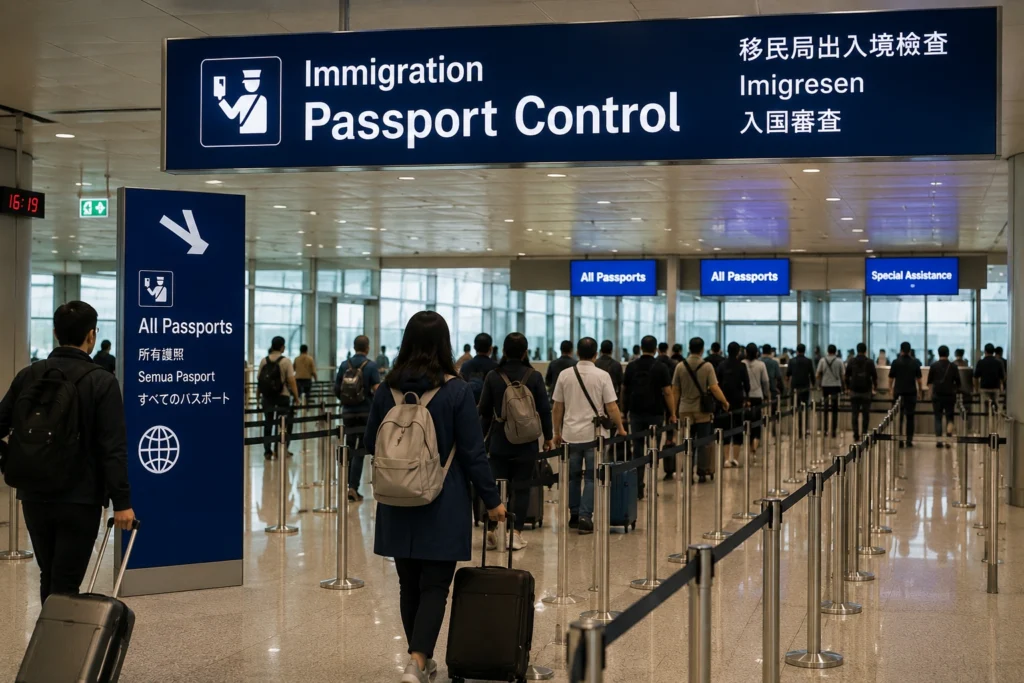
The two biggest problems are insufficient passport validity and missing onward travel proof.
Most countries require your passport to remain valid for at least six months beyond arrival. Not all do. Enough do that you should treat it as universal.
I’ve watched travellers denied check-in over passports expiring in five months and three weeks. The trip was fully paid. Hotel non-refundable. Airline indifferent.
The second mistake is assuming one-way tickets are harmless. Immigration systems flag them constantly.
Some countries barely care. Others absolutely do. Costa Rica, the Philippines, and parts of Southeast Asia regularly request onward proof. Budget travellers trying to “figure it out later” discover this at the gate instead of at home.
The workaround experienced travellers use is simple:
- refundable onward ticket,
- legitimate bus booking,
- or temporary onward reservation service.
What you should not do is fake documentation. Border systems are far less casual than travel TikTok makes them appear.
How Long US Citizens Can Stay — And What Happens If You Overstay
Overstaying a visa-free entry can trigger fines, deportation, future entry bans, or immigration questioning on later trips.
The consequences vary by country. The mistake people make is assuming minor overstays are treated casually everywhere.
Europe’s Schengen system records entries digitally with increasing accuracy. Thailand fines overstays daily. Indonesia can detain travellers before deportation processing. Australia tracks compliance tightly enough that future visa approvals become harder after violations.
This is where “digital nomad optimism” collides with immigration law.
Typical stay limits:
- Schengen Area: 90 days in 180
- UK: 180 days
- Japan: 90 days
- Thailand: varies by current policy
- Mexico: officer discretion up to 180 days
- Singapore: usually 90 days
(Verify at official source — rules change without notice)
Countries Requiring Extra Entry Authorisation Even for US Passport Holders
Several countries now require digital pre-authorisation systems despite allowing “visa-free” access.
Australia requires ETA approval before departure. New Zealand requires NZeTA approval. The UK is expanding ETA systems. Europe’s ETIAS rollout is expected to affect Americans entering Schengen countries in 2026.
These systems are usually inexpensive — often under $25 — but forgetting them can block boarding entirely.
(2025–2026 rates — verify before travel)
This is also where scam websites thrive. Search results for ETA systems are flooded with third-party agencies charging triple the official price.
Use government portals only.
The difference between a $7 official application and a $79 “processing partner” is usually just better advertising.
What This Actually Costs — Flights, Entry Fees, Insurance, and Border Surprises
Visa-free travel still costs money long before the trip begins.
| Expense | Typical Cost | Notes |
|---|---|---|
| Passport renewal | $130+ | US standard adult renewal |
| ETA / ETIAS systems | $7–$25 | Country dependent |
| Travel insurance | $60–$180 per trip | Age and destination matter |
| Onward ticket workaround | $14–$30 | Temporary reservation services |
| Visa-on-arrival fees | $25–$100 | Egypt, Tanzania, others |
| Passport photos | $12–$25 | Needed for some visas |
(2025–2026 rates — verify before travel)
The cost most people miss is card fees abroad.
Dynamic Currency Conversion — DCC — is when a payment terminal offers to charge your card in US dollars instead of local currency. Decline it every time. Always pay in local currency.
The markup is typically 3–8%. Airports and tourist-heavy areas in Western Europe push this aggressively because confused travellers accept it constantly.
Wise remains one of the strongest options for holding multiple currencies at near mid-market exchange rates, with conversion fees typically between 0.41% and 2.85% depending on currency pair. Revolut works well for ATM-heavy trips within monthly withdrawal limits. Charles Schwab High Yield Investor Checking remains excellent for US travellers wanting global ATM reimbursements with no foreign transaction fees.
(Verify current fees at official provider websites)
The Best Visa-Free Trips for First-Time International Travellers
Japan, Portugal, Costa Rica, and Thailand remain among the best first international trips for Americans because the logistics burden stays manageable without feeling sterile.
Japan works because infrastructure is absurdly efficient once you understand it. Portugal works because English usage is widespread in tourist zones and transport is straightforward. Costa Rica works because the tourism industry has solved most friction points already.
Thailand is slightly different. The learning curve is steeper. The reward is higher.
Bangkok is the city where many first-time travellers realise they massively overpacked, underestimated humidity, and forgot that crossing a road can require tactical decision-making. But it’s also where international travel stops feeling theoretical.
And yes — everyone gets ripped off by at least one airport taxi eventually. Consider it tuition.
What to Book Before You Fly — And What Can Wait
You should lock in your passport validity, entry authorisation, and first-night accommodation before booking activities.
Everything else depends on destination and season.
Book early:
- Passport renewal
- ETA / ETIAS systems
- Peak-season flights
- Arrival accommodation
- Mandatory insurance where required
Wait on:
- Day tours
- Most restaurants
- Domestic transport in flexible countries
- Minor attraction tickets
The exception is Japan during cherry blossom season. Book that trip 5–6 months ahead minimum or prepare for hotel prices that stop being funny quickly.
US–Europe flights usually hit their best booking window roughly 2–8 months before departure, with many summer fares peaking 3–5 months out. US domestic routes typically work best 5–8 weeks before travel. Asia-Pacific routes generally reward booking 3–6 months ahead.
(Based on 2025 Skyscanner and Google Flights data — verify before relying on this for any specific booking)
The Border Control Questions You Will Almost Certainly Be Asked
Immigration officers mainly want to establish that you intend to leave legally and can support yourself while visiting.
The questions are usually simple:
- Why are you visiting?
- How long are you staying?
- Where are you staying?
- When is your return flight?
- What do you do for work?
The mistake nervous travellers make is overexplaining.
Short, direct answers work best. Officers do this all day. Rambling sounds worse than brevity.
And keep documents accessible before you reach the desk. Watching someone unpack their entire backpack while blocking an immigration queue is a universal airport experience nobody enjoys from either side.
What Experienced Travellers Carry That First-Timers Usually Forget
Experienced travellers carry backups for failure scenarios rather than more outfits.
That means:
- secondary debit or credit card,
- printed hotel address,
- offline maps,
- digital passport copy,
- small emergency cash reserve,
- and a charging cable accessible before boarding.
A frozen card abroad is survivable if you planned for it. Wise lets users freeze and unfreeze cards inside the app in seconds, while Western Union same-day transfers under $500 often cost roughly $15 depending on corridor and payout method.
(2025–2026 rates — verify before travel)
The real mistake isn’t losing a card. It’s travelling with exactly one way to access money.
That failure chain gets ugly fast.
Frequently Asked Questions About Visa-Free Countries for US Citizens
Do US citizens need a visa for Europe in 2026?
Most European countries in the Schengen Area remain visa-free for Americans for short stays, but ETIAS travel authorisation is expected to become mandatory. It is not a traditional visa, but you will likely need approval before boarding.
(Verify at official source — rules change without notice)
What countries can Americans visit without a visa?
Americans can enter large parts of Europe, Latin America, the Caribbean, and sections of Asia without traditional visas. Japan, most of Western Europe, Costa Rica, and the UK remain among the simplest options for first-time international trips.
How long can US citizens stay in Europe without a visa?
US passport holders can generally stay within the Schengen Area for 90 days within any rolling 180-day period. The limit applies collectively across Schengen countries rather than individually.
Is visa-free the same as no paperwork?
No. Many “visa-free” destinations still require onward tickets, accommodation proof, digital travel authorisation systems, or arrival forms before entry.
What happens if you overstay a visa-free entry?
Consequences range from fines to deportation to future entry restrictions depending on the country. Some nations apply daily fines immediately. Others record immigration violations that affect future applications.
Continue Exploring
- trip planning pillar breaks down flights, insurance, banking, visas, and the planning systems that prevent expensive mistakes before departure.
- international trip planning checklist works well if this is your first trip abroad and you want the exact order to book documents, flights, money, and accommodation.