Successful trip planning requires a sequence of five non-negotiable steps: selecting a destination that matches your budget, verifying visa requirements, securing flights during the 2026 “price trough” window, booking refundable accommodation, and automating your on-ground finances.
Many first-time travelers fail by booking flights before checking the $250+ cost of a specific regional visa or realizing that a “low season” in Southeast Asia means peak monsoon floods that shut down boat transfers. This how to plan a trip guide provides a tactical travel planning checklist to ensure your first major journey is defined by the experiences you have, not the expensive mistakes you make.
The Core Framework: How to Plan a Trip Without Missing a Detail
A reliable trip planning guide follows a linear timeline to prevent backtracking and lost deposits. Start with your “hard constraints”—your total budget and your available dates—then move to “soft variables” like specific neighborhoods or daily tours. I learned this the hard way in Tokyo when I booked a “non-refundable” hotel in Shinjuku before realizing the specific festival I wanted to see was three hours away in Kyoto, forcing a $600 Shinkansen and hotel double-payment error.
To avoid this, use a travel planning checklist that prioritizes logistics in this order:
- Visa & Entry Requirements: If you can’t get in, nothing else matters.
- Flights: Usually the largest fixed cost.
- Route Mapping: Connecting the dots between cities.
- Lodging: Locking in prices while they are low.
- On-ground logistics: Local SIM cards, transit passes, and currency.
Determining the Best Time to Visit Based on Your Priorities
The best time to visit any destination is found by identifying the “Shoulder Season,” which typically offers a 20–30% discount on accommodation compared to peak dates. Peak season (usually summer or major holidays) brings the highest prices and largest crowds, while low season often carries weather risks that can cancel flights or close attractions. For example, visiting the Greek Islands in November means most ferries have stopped running and 70% of businesses on Santorini are shuttered—a fact many guidebooks gloss over.
(Verify at official tourism boards — seasonal schedules change without notice)
Selecting Top Attractions Without Falling for Tourist Traps
High-value trip planning involves selecting two “anchor” attractions per day and leaving the rest of the schedule open for local discovery. Using sites like TripAdvisor or Viator is helpful for research, but always verify the actual experience through recent Reddit threads or local blogs. Avoid “all-in-one” city passes unless you plan to visit at least three high-cost museums in a single day; otherwise, the individual entry fees are often cheaper than the pass itself.
Where to Stay: Navigating Accommodation Tiers and Neighborhoods
Choose your accommodation based on proximity to the primary transit hub, not just the lowest price. A “cheap” hotel located 45 minutes outside the city center will cost you $30–$50 per day in Uber or taxi fares, effectively erasing any initial savings.
| Tier | Typical Cost (2025–2026) | Best For |
| Social Hostels | $25–$50 (Dorm bed) | Solo travelers, tight budgets |
| Boutique Hotels | $150–$280 | Couples, mid-range comfort |
| Luxury/High-End | $450–$900+ | Special occasions, full service |
(2025–2026 rates — verify before travel)
Getting Around: Mastering Local Transit and Regional Logistics
The most cost-effective way to navigate a new country is to download the local equivalent of Uber (like Grab in SE Asia or Bolt in Europe) and purchase a physical transit card at the airport arrival hall. Do not rely on “tourist shuttles” which often charge a 400% premium over the local bus or metro. In London, using an Oyster card or contactless payment capped at daily limits will save you roughly £10 per day compared to buying individual paper tickets.
(Schedules change — confirm before travel)
Managing Costs & Budget: Real-World Projections for 2025–2026
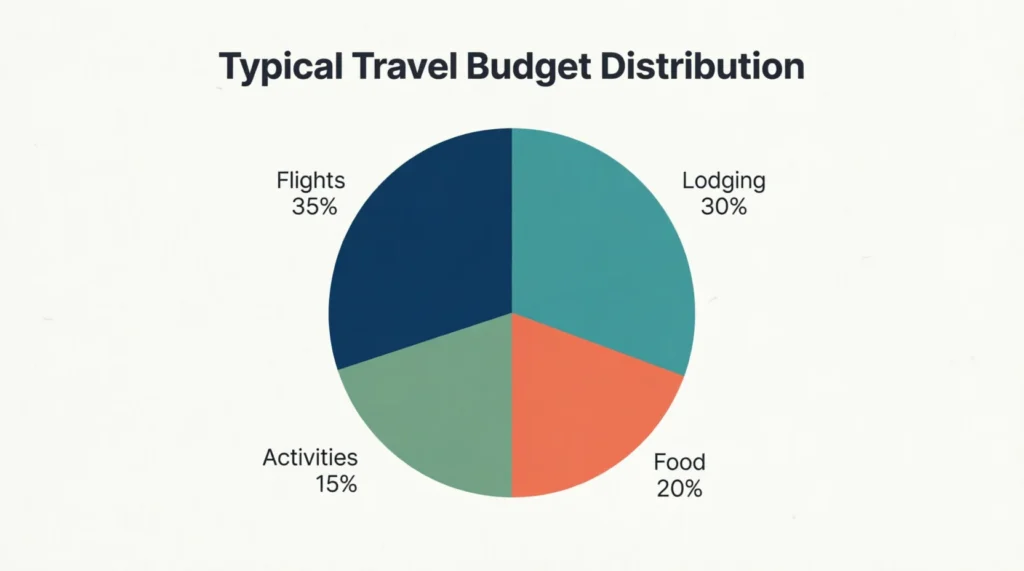
A realistic daily budget for a mid-range traveler in 2026 ranges from $120 to $250 per day, excluding international flights. This includes a $150 boutique hotel room, $60 for food and drink, and $40 for local transport and entry fees.
- Flights: Budget transatlantic fares booked 5 months out average $550–$750 in 2025–2026. Last-minute summer fares regularly exceed $1,200.
- Dining: A meal at a mid-range sit-down restaurant in Western Europe or the US now averages $35–$55 per person including a drink and tip.
Always use a card that avoids Foreign Transaction Fees. When a card machine asks if you want to pay in “USD” or the “Local Currency,” always choose the Local Currency. This avoids Dynamic Currency Conversion (DCC), where the local merchant’s bank applies a terrible exchange rate, often costing you an extra 5–10% on every transaction.
Sample Itinerary: A Balanced Framework for a 10-Day Trip
A successful 10-day itinerary follows a “3-3-4” structure: 3 days in a major hub, 3 days in a smaller regional town, and 4 days in a final coastal or mountain destination. This prevents “travel burnout,” where you spend more time in transit than actually seeing the sights. For a first-timer in Italy, this looks like: 3 days in Rome, 3 days in Florence, and 4 days in a Tuscan villa or the Amalfi Coast.
Insider Tips: The Logistics Nobody Tells You Before You Go
The single most important logistics step is securing your data and banking before you leave the airport.
- eSIMs: Use Airalo or Holafly to install a digital SIM before you land. It costs about $15–$30 for 10GB but saves you from the “Airport Wi-Fi” trap.
- Banking: Carry two separate debit cards from different banks. If one is swallowed by an ATM in Lisbon, you aren’t stranded without cash.
- Documentation: Keep a digital scan of your passport on a cloud drive (Google Drive/Dropbox) and a physical photocopy in your luggage.
Do I need a visa?
Visa requirements depend entirely on your passport’s country of issue. US, UK, and EU citizens currently enjoy visa-free or visa-on-arrival access to over 150 countries, but emerging requirements like the ETIAS for Europe (launching 2025) mean you must check requirements even for “easy” destinations.
How to apply: Use official government portals (usually ending in .gov or .go.xx). Avoid “Visa Processing” sites that charge a $50–$100 service fee on top of the government cost.
What goes wrong: Blurred passport photos and mismatched names (missing middle names) are the #1 cause of e-visa rejections.
Overstay consequences: Overstaying a visa can result in immediate deportation, fines exceeding $1,000, and a 5–10 year ban from the entire region (like the Schengen Area). Never risk it.
(Verify at [official government source] — rules change without notice)
Frequently Asked Questions About How to Plan a Trip
How far in advance should I book my flights?
For international “long-haul” routes, the price trough is generally 4–6 months before departure. For domestic flights, 1–2 months is the sweet spot. Using Google Flights “Track Prices” feature allows you to see if the current fare is high, low, or typical for your dates based on historical 2025 data.
Is travel insurance actually necessary for every trip?
Yes, but specifically for medical evacuation and trip interruption, not just “lost luggage.” A standard policy costing $80–$120 can save you $50,000+ if you require an emergency medical flight. Always ensure your policy covers “Pre-existing conditions” if applicable, as insurers look for any reason to deny high-value claims.
What is the best way to handle money abroad?
Open a Charles Schwab or Wise account to avoid ATM withdrawal fees and foreign transaction fees. These banks use the “Mid-Market” exchange rate, which is the fairest rate available. Avoid “Currency Exchange” booths at airports, which typically take a 15–20% cut through hidden margins in their exchange rates.
How do I stay safe as a first-time traveler?
Safety is largely a matter of “situational awareness” and “digital security.” Use a cross-body bag with locking zippers in high-pickpocket areas like Barcelona or Paris. Never use public Wi-Fi for banking without a VPN, and always keep your hotel’s address written down in the local language in case your phone battery dies.
Should I use a travel agent or plan it myself?
Plan it yourself for standard destinations like London, Tokyo, or New York to save on commissions and maintain flexibility. Use a specialized travel agent only for complex, high-logistics trips like African safaris or remote Himalayan trekking where local knowledge and private transport are mandatory for safety and access.
CONTINUE EXPLORING:
- how to find cheap flights: Master the advanced booking techniques and “error fare” tracking to slash your biggest travel expense.
- travel finance guide: Learn how to set up a fee-free banking system and protect your money while moving across borders.