Introduction
The first thing you notice about Tampa isn’t what’s there—it’s what’s missing.
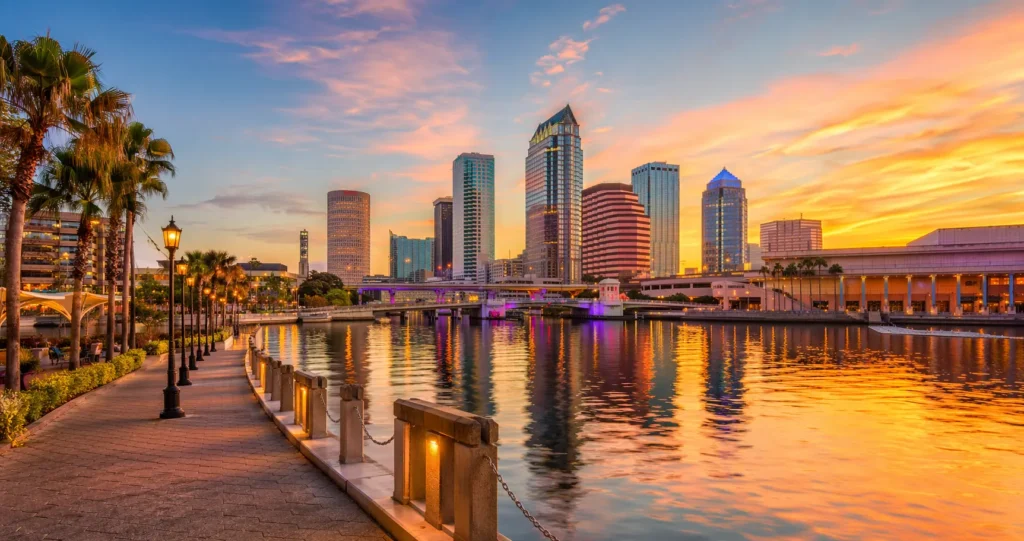
No overwhelming skyline. No chaotic downtown rush. At 6:30pm on a Thursday, I walked the Riverwalk and heard more footsteps than traffic. That’s not normal for a major Florida city—and it’s exactly why Tampa works.
Most first-time visitors land in Orlando, push down to Miami, and skip this stretch entirely. That’s a mistake. Tampa is where Florida feels livable instead of staged, and where your trip doesn’t get swallowed by crowds and inflated prices.
I’ve spent afternoons here where a waterfront beer cost $7, not $18, and mornings where you could actually find a quiet coffee shop without queuing behind 40 people holding theme park maps.
This tampa travel guide breaks down exactly how to visit, where to stay, what to skip, and how to make your first trip feel easy instead of overwhelming.
Quick Overview
Tampa sits on Florida’s Gulf Coast, about 1 hour west of Orlando (85 miles / 137 km). It’s part of a wider metro area that includes St. Petersburg and Clearwater—but Tampa itself leans more urban than beachy.
Best time to visit:
November to April. Expect 70–80°F (21–27°C), low humidity, and manageable crowds.
Avoid if possible:
June to September. Temperatures hit 90–95°F (32–35°C) with heavy humidity, plus daily afternoon storms. Hurricane season runs June–November.
Trip length:
2–3 days is enough for a first visit.
What Tampa is good at:
Walkable waterfront, relaxed pace, solid food scene, access to beaches without staying in them.
What it’s not:
This is not Miami. Nightlife is quieter, and the beaches are a 30–45 minute drive away.
Top Things to Do
Walk the Tampa Riverwalk (Start at Water Works Park, 8am)
Start early. By 8am, the heat hasn’t set in, and locals are out running or walking dogs. The stretch from Water Works Park down to Sparkman Wharf is about 2.6 miles (4.2 km), flat and easy.
I did this on a weekday morning and stopped twice just to sit—once near the University of Tampa’s minarets reflecting in the water, and again near Harbour Island where the path quiets down.
Skip doing this midday in summer. The shade disappears, and the humidity turns a pleasant walk into a slow endurance test.
Visit Ybor City (Go After 5pm, Not Noon)
Ybor City is Tampa’s historic district—brick streets, cigar heritage, and a nightlife scene that comes alive after dark.
Here’s the honest take:
At noon, it feels empty and slightly staged. Shops open, but the energy isn’t there.
Come after 5pm. That’s when the place shifts. Restaurants fill up, music spills into the street, and the whole area finally makes sense.
Bayshore Boulevard (Late Afternoon Walk)
This is the longest continuous sidewalk in the US—4.5 miles (7.2 km) along the water.
Go around 5:30pm. The light softens, the skyline across the bay starts to glow, and locals come out for evening runs.
I walked just a mile here and turned back—it’s not about finishing it, it’s about catching the right moment.
Sparkman Wharf (Food Without the Theme Park Feel)
Outdoor seating, container-style food stalls, and waterfront views.
Unlike Orlando’s polished dining zones, this feels casual. You order, sit, and stay as long as you want.
Expect $12–$18 meals (2025–2026 rates — verify before travel).
What to Skip (And What to Do Instead)
Skip: Busch Gardens if you’re already doing Orlando parks.
It’s good, but not worth duplicating the theme park experience.Do instead:
Drive 40 minutes to St. Pete Beach. Same Gulf Coast water, far less crowd pressure than Miami.
Where to Stay
Downtown Tampa (Best for First-Time Visits)
Stay here if you want everything within walking distance—Riverwalk, restaurants, museums.
Hotels average $180–$300 per night (2025–2026 rates — verify before travel).
I stayed near Curtis Hixon Park and barely used a car for 24 hours.
Hyde Park (Quieter, Slightly Upscale)
Tree-lined streets, cafes, and boutique shops.
It feels residential in a good way—less noise, more space. Perfect if you don’t want a full downtown atmosphere.
Ybor City (Only If You Want Nightlife)
Convenient for bars and late nights, but not ideal for first-timers who want easy mornings.
Noise carries. You’ll notice.
Getting Around
You will need a car.
That’s the reality most first-time visitors underestimate. Tampa isn’t built for full public transport coverage.
Airport to downtown:
15–20 minutes (9 miles / 14 km) without traffic.
30–40 minutes during peak hours.
Downtown to St. Pete Beach:
45 minutes (30 miles / 48 km), realistically closer to 60 with traffic.
Uber costs:
$12–$25 for short city rides (2025–2026 rates — verify before travel).
There is a free streetcar between downtown and Ybor City, but it’s limited. Useful, not sufficient.
Budget Guide
Budget Traveler ($120–$180/day)
- Hostel or budget hotel: $70–$100
- Food: $25–$40
- Transport: $15–$30
Tampa works well at this level compared to Miami.
Mid-Range ($200–$350/day)
- Hotel: $150–$250
- Food: $50–$80
- Transport + activities: $30–$50
This is where most travelers land.
Worth the Splurge ($400+/day)
- Waterfront hotels
- Better dining experiences
- Day trips with flexibility
Even here, Tampa rarely hits Miami-level pricing.
Sample Itinerary
Day 1 — Downtown + Riverwalk
Morning:
Start at Water Works Park, walk the Riverwalk.
Afternoon:
Lunch near Sparkman Wharf. Rest during peak heat.
Evening:
Walk Bayshore Boulevard at sunset.
Day 2 — Ybor + Beach
Morning:
Slow start. Coffee in Hyde Park.
Afternoon:
Drive to St. Pete Beach (45–60 minutes real travel time).
Evening:
Return and head to Ybor City after 6pm.
Pro Tips
- Plan outdoor activities before 11am in warmer months. Heat builds fast.
- Parking downtown is easier than Miami—but still costs $10–$25/day (2025–2026 rates — verify before travel).
- Restaurants don’t always require reservations, but weekends fill quickly.
- Florida weather changes fast. A clear morning can turn into a storm by 3pm.
- Tipping standard: 15–20% at restaurants.
Frequently Asked Questions About Tampa Travel Guide
Is Tampa worth visiting over Miami?
Yes, if you want a calmer trip. Tampa trades nightlife intensity for space, lower costs, and less crowd pressure. Miami still wins for beach access and late nights.
How many days do you need in Tampa?
Two to three days is enough for a first visit. Add an extra day if you plan to include beaches like St. Pete.
Do you need a car in Tampa?
Yes. Public transport is limited. You can manage one day downtown without it, but not a full trip.
Is Tampa safe for tourists?
Generally yes. Stick to central areas like downtown, Hyde Park, and Riverwalk, especially at night.
Continue Exploring
Florida travel guide
A full breakdown of where Tampa fits compared to Miami, Orlando, and the Keys.